Murray Irrigation
Project: Restoring Murray WAterways
Restoring Murray Waterways Program
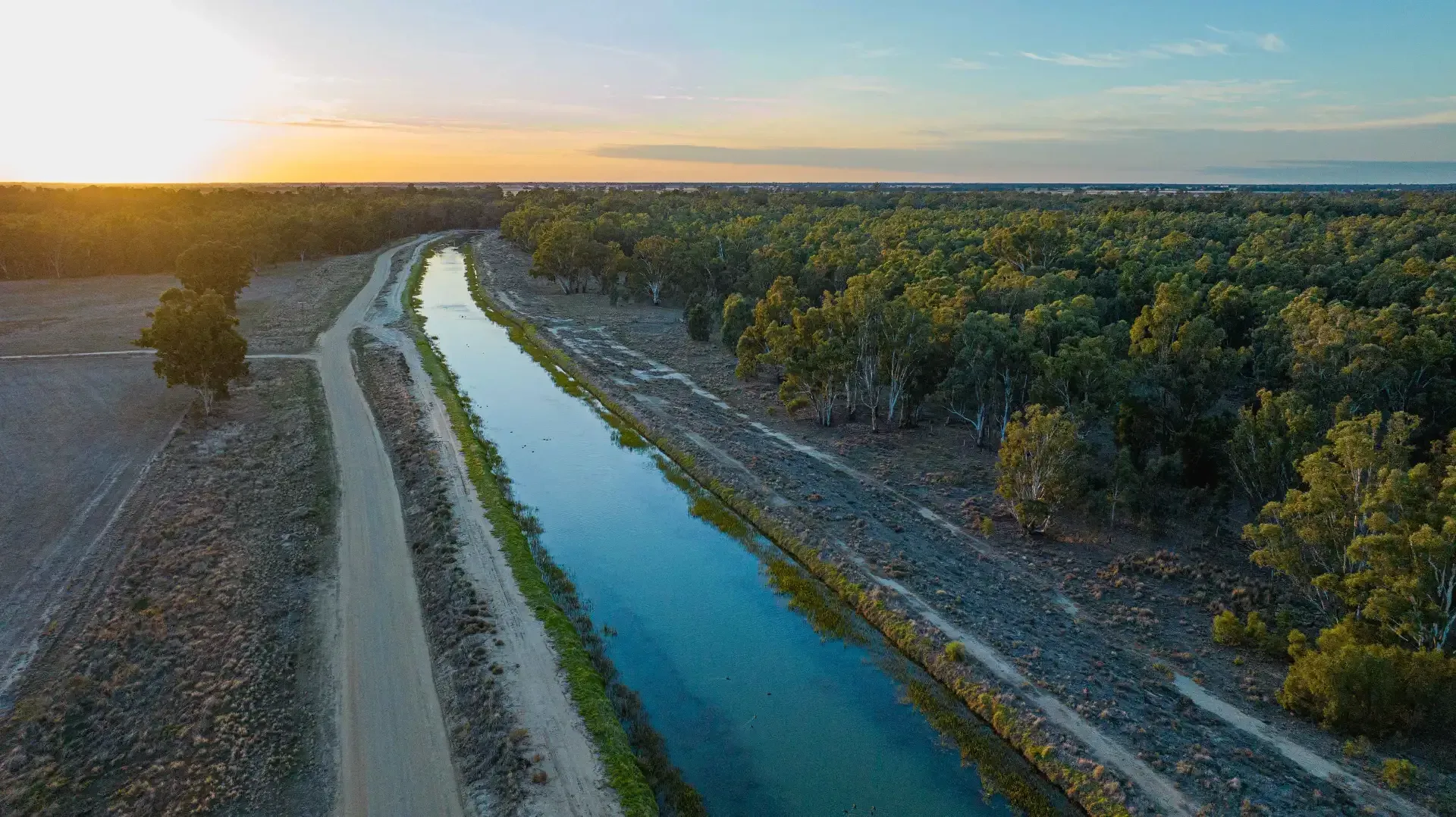
A landmark $28.5 million initiative funded by the Australian Government in partnership with Murray Irrigation, is improving water connectivity throughout the Edward/Kolety-Wakool (EKW) river system – a unique landscape of high-value environmental assets.
Implemented by Murray Irrigation, the project has upgraded critical infrastructure assets that has improved flow paths across 308 km of creeks and 2,680 ha of wetlands. These improvements increase the capacity for targeted environmental watering to support high value creeks and wetland habitats that experience longer dry periods due to historical changes in water flow and management. The upgraded water delivery infrastructure also enables environmental water to reach biodiversity hotspots of both regional and National Significance.
By using this irrigation network to deliver environmental water, we can mimic a more natural watering regime, supporting the health and resilience of aquatic plants and animals. The creeks and wetlands within the EKW system provides essential habitat for a diverse range of species, including fauna such as Murray cod, southern bell frog, and the Australasian bittern.
This important work has strengthened connections between local waterways, larger river systems, and internationally significant wetlands such as the Werai Forest Ramsar Site.

Key Deliverables
Key infrastructure and ecological connections delivered through the Restoring Murray Waterways Program.
308 km
Improved Creek Flow Paths
Enhanced connectivity throughout the EKW system.
2,680 ha
Wetland Connectivity
Across 9 strategic sites.
87
Culverts Constructed
Fish-friendly infrastructure for seamless access
19
Low Level Crossings
Providing farm access while maintaining connectivity
13
Environmental Water Outlets
5 new and 8 upgraded outlets
46
Landholders Engaged
Universal support across all 112 sites

Explore the Restoring Murray Waterways project
Learn more about the works on the different creek systems and how the Murray Irrigation network and support from local landholders has been key to the investment program.
Sample Map
Landholder partnerships
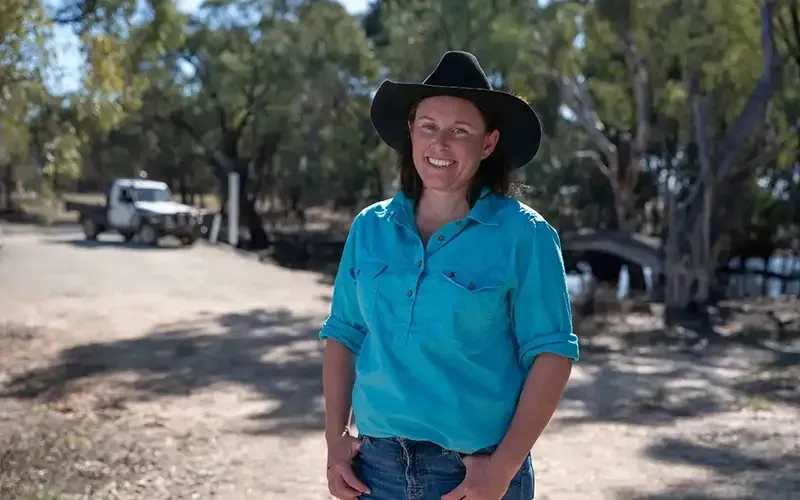
Successful landholder partnerships have been crucial to the Restoring Murray Waterways project's success. Murray Irrigation's established, trusted relationships with landholders from delivering irrigation water provided a strong foundation for the new environmental-focussed works. This pre-existing trust was key to achieving comprehensive landholder support. Landholders reported the process was seamless and beneficial, highlighting effective communication and coordination that made the integration of new infrastructure easy and non-disruptive to their operations.
Construction success
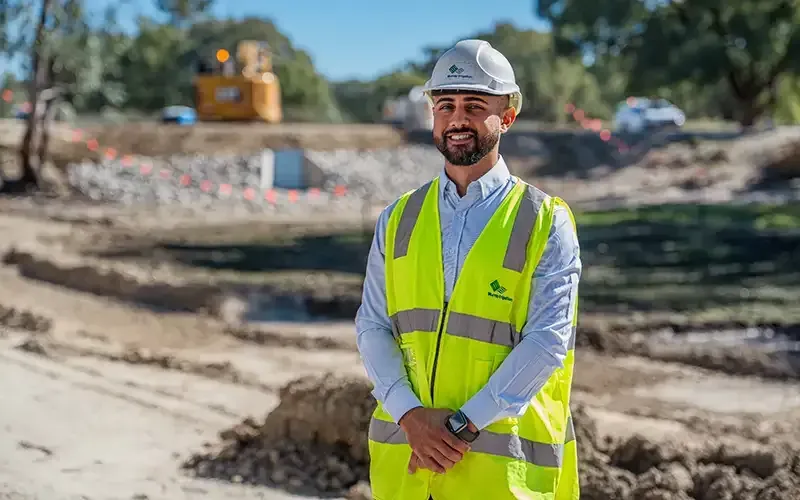
The construction team's success was rooted in its program design and effective on-ground delivery. The project successfully built 263 structures by engaging local contractors and leveraging existing Murray Irrigation assets and networks. This strategy ensured economic benefits flowed directly into the local community. Landholders praised the contractors for their seamless and professional operation, completing work efficiently without disrupting farm activities. This reliable execution by a professional and locally-based team was fundamental to the project's success.
Environmental outcomes
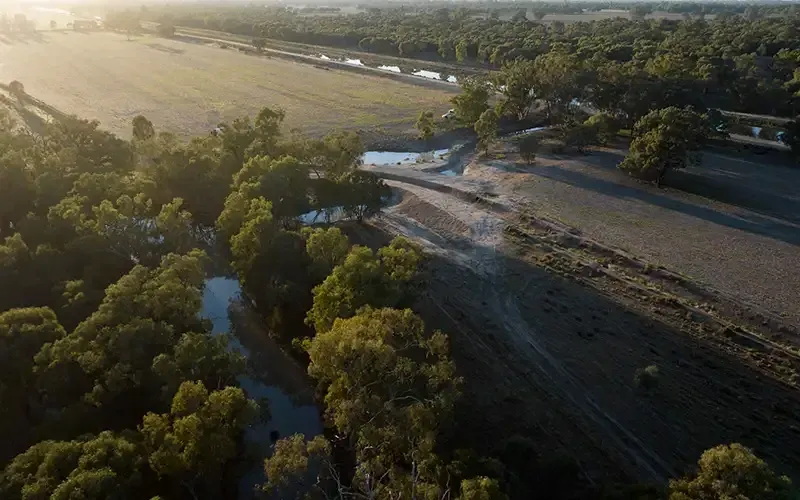
The basis for the achievement of the ultimate environmental outcomes sought from this investment stems from the innovative use of Murray Irrigation's existing gravity-fed infrastructure to deliver water to high-value ecological areas. This method efficiently gets relatively small volumes of water into creeks and wetlands that would otherwise remain dry. Over time with water delivery, this approach will provide the basis for the improved vegetation health, and enhanced water quality, achieving tangible outcomes that contribute to the broader goals of the Murray-Darling Basin Plan.
Intended Program Objectives
Objective 1
Improved flow paths in vital creeks
Objective 2
Enhance and improve wetland and aquatic ecological functions in the Edward-Wakool River system
Objective 3
Develop a business case that provides recommendations for implementing future works in the Mid-Murray and other regions
Intended Program Outcomes
Outcome 1
Connect priority wetland systems in the Edward-Wakool river system to the existing water delivery network to enable environmental watering of aquatic habitats that are otherwise infrequently watered by run-off and flow events.
Outcome 2
Document processes and evaluate outcomes that can be applied to other proposed locations and programs of work.
Infrastructure
Read about the different types of infrastructure that have been delivered.
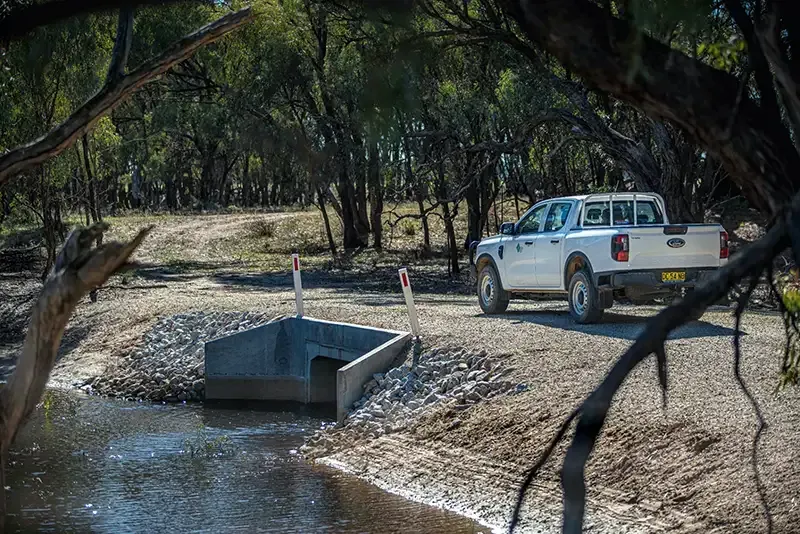
Fish friendly box culverts
A total of 87 culverts were constructed. Culverts provide seamless farm access for livestock and vehicles during more frequent environmental flows and when creek environments are wet and boggy. To support aquatic life, "fish-friendly" box culverts were specifically chosen to ensure suitable passage for native fish and other aquatic species. Culverts were installed in more high-use farm areas.
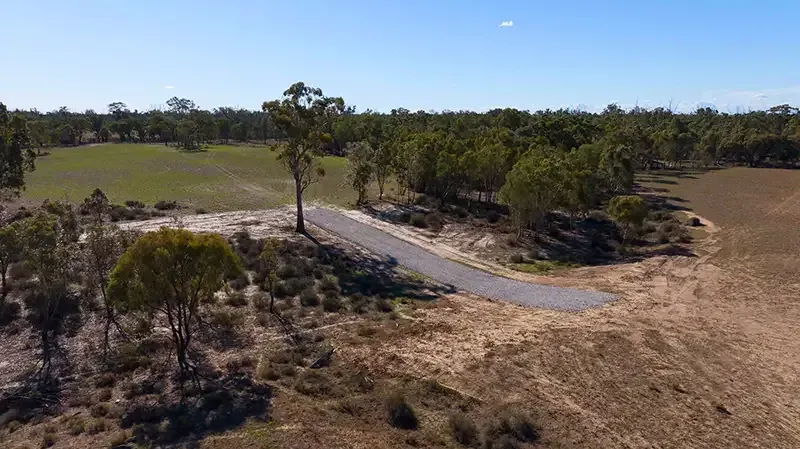
Low Level Rock Crossings
A total of 19 low-level rock crossings were constructed. Low-level rock crossings provide farm access in lower-use areas for livestock and vehicles during more frequent environmental flows and when creek environments are wet and boggy. As a result of being located in the channel, these structures 'drown out' when water is in the channel, ensuring there is no impediment to the movement of in-stream species.
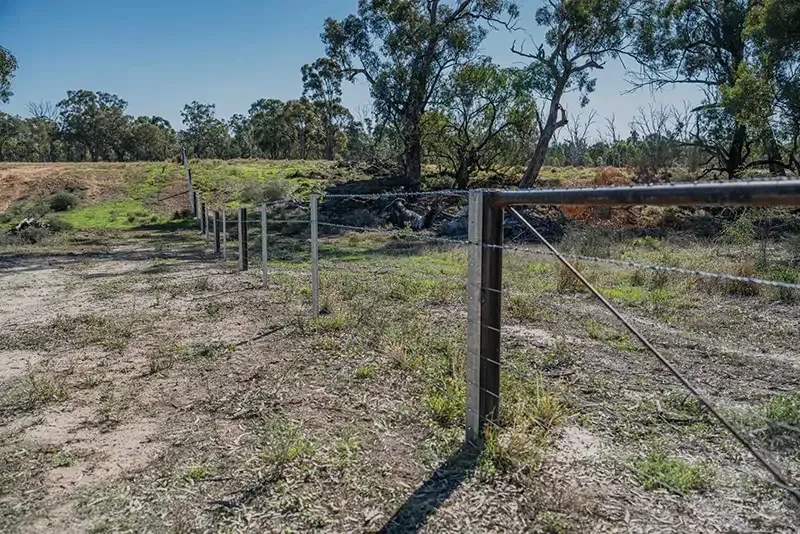
Boundary fence crossings
A total of 133 Boundary fence crossings were constructed in association with the core pieces of infrastructure (culverts, low-level rock crossings, etc). In some locations, fences were replaced and in others new fencing was installed. Fences support both the infrastructure works and on-farm management of livestock for local landholders.
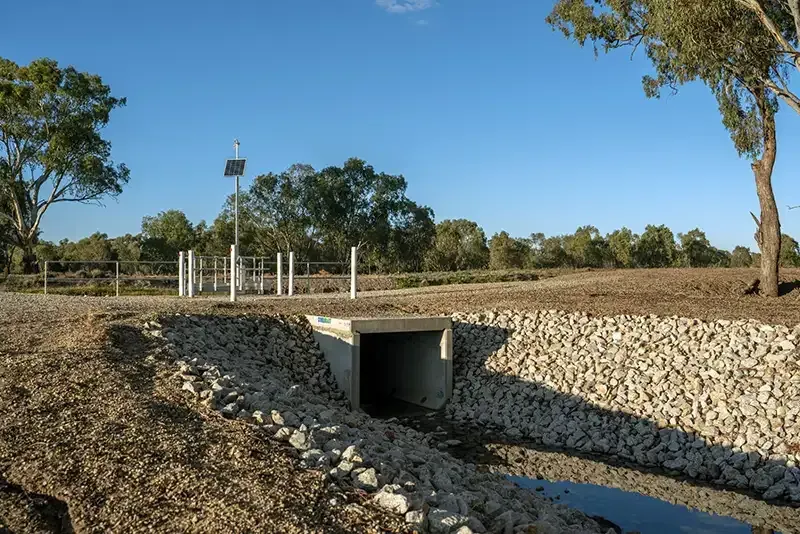
Environmental water outlets
A total of 13 environmental water outlets (8 upgraded and 5 new) were completed. The escapes allow for water to be accurately and efficiently delivered into different parts of the creek network when seeking to achieve target environmental outcomes. All escapes are able to be remotely operated through Murray Irrigation's control centre in Deniliquin.
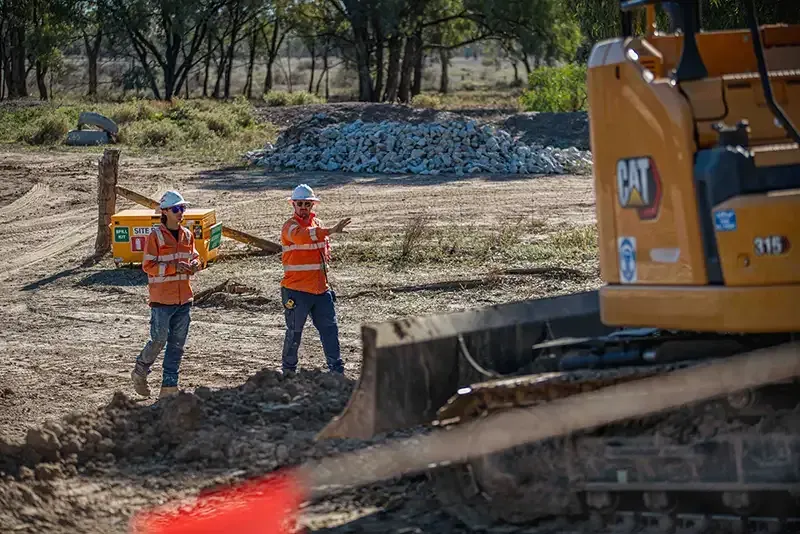
Construction Crews
Under the direction and supervision of Blackwatch Consulting, four independent construction crews were sourced from the local region, ensuring economic benefits flowed directly into the community and crews were able to easily mobilise to and support regional works sites. Discrete packages of works were scoped and formed the basis of engagement and delivery by the contractors.
Our Partners
The success of the Restoring Murray Waterways Program relies on strong partnerships and collaborative efforts from various stakeholders.