
Murray Irrigation
Restoring Murray Waterways
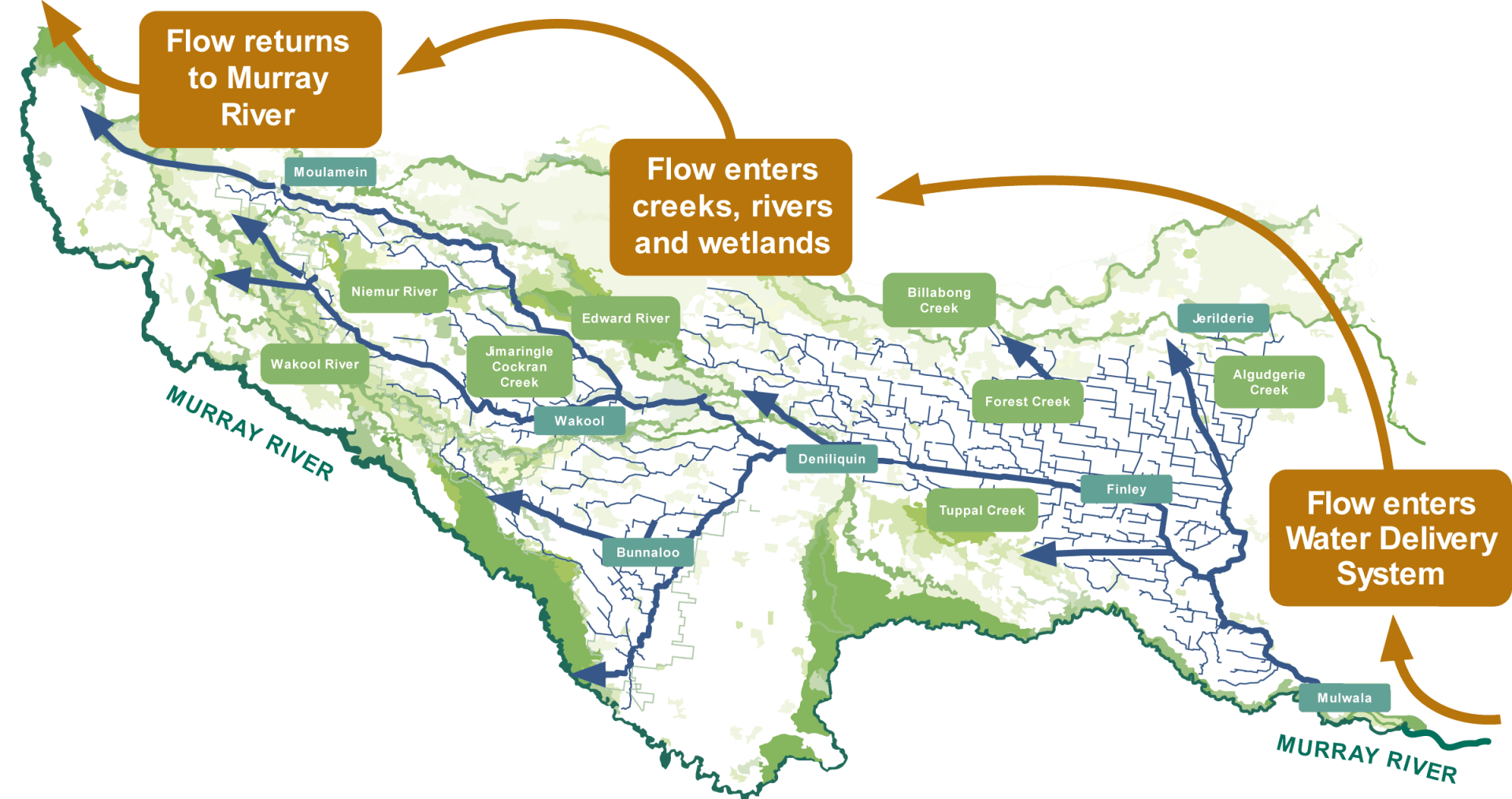
Utilising Murray Irrigation's water supply infrastructure to connect hundreds of kilometres of riparian systems and wetlands throughout the Edward-Wakool River Region, targeting at-risk ecosystems.
Murray Irrigation’s Restoring Murray Waterways (RMW) is one of Australia’s largest targeted and collaborative environmental watering initiatives.
RMW uses Murray Irrigation’s gravity fed supply channel network to efficiently deliver environmental water to creeks and wetlands in the Murray Irrigation area that otherwise only receive water in times of high Murray River flows. RMW is focused on reviving the health of, and restoring connection to, the region’s valuable creeks and wetlands.
In June 2025 the Murray Darling Basin Authority officially notified the RMW project as a Sustainable Diversion Limit Adjustment Mechanism (SDLAM) project to contribute to offsetting the 605GL of water the Government needs to recover from the consumptive pool in the Basin for future environmental use.

Restoring Murray Waterways Stages
Outcome: Deliver water to 280km of ephemeral creeks and 54 wetlands.
Cost: $1.9M Funded by in part by the NSW Government
Status: Completed September 2023
STAGE 1
Pilot works and wetland watering activities
Smaller scale pilot works upgrading eight escape water delivery structures to support creek and wetland watering initiatives.
Outcome: Installation of two creek crossings and a fence creek crossing.
Cost: $0.4M Funded by Australian Government Department of Climate Change, Energy the Environment and Water
Status: Completed November 2023
STAGE 2
Demonstration sites
Installation of demonstration sites for fish-friendly access crossings which allow fish and aquatic life to freely swim up and downstream to breed and find shelter.
Outcome: 130km of creek systems connected for fish passage. These works consisted of 10 creek crossings and 9 new fences.
Cost: $1.96M Funded by Australian Government Department of Climate Change, Energy the Environment and Water, Murray Darling Basin Healthy Rivers Program
Status: Completed July 2024
STAGE 3
Restoring the Jimaringle and Cockran Creeks system
Expanded works to connect this ephemeral creek system for fish passage. This stage was supported by 30 Landholders.
Outcome: Improved flow paths in 308 km of creeks and 2,680HA of wetlands and a completed comprehensive Business Case to support the Expansion Phase.
Cost: $28.45M funded by the Australian Government Department of Climate Change, Energy the Environment and Water.
Status: Completed October 2025
STAGE 4
Restoring local creeks and wetlands and Business Case
Upscale local works to connect creek systems and establish wetland watering sites, and develop a Business Case for Expansion Phase. This stage was supported by 45 Landholders.
Visit our Stage 4 dashboard for further detailed information.
Outcome: Connect a further 300km of creeks and up to 10,000HA of wetlands.
Cost: $72M Funded by the Australian Government Department of Climate Change, Energy the Environment and Water and delivered by NSW DCCEEW via the SDLAM Supply Project.
Status: In progress. Due for completion December 2026
STAGE 5
Expansion
phase of the project now underway
Large scale expansion of the proven project concept to further connect environmental assets utilising Murray Irrigation's infrastructure.
Outcome: Connect a further 320km of creeks and 6,482ha of wetlands.
Cost: Up to $73.5M funded by the Australian Government Department of Climate Change, Energy, the Environment and Water and delivered as part of the NSW Government's Sustainable Diversion Limit Adjust Mechanism (SDLAM) program.
Status: In progress. Due for completion by December 2026.

Environmental benefits of RMW
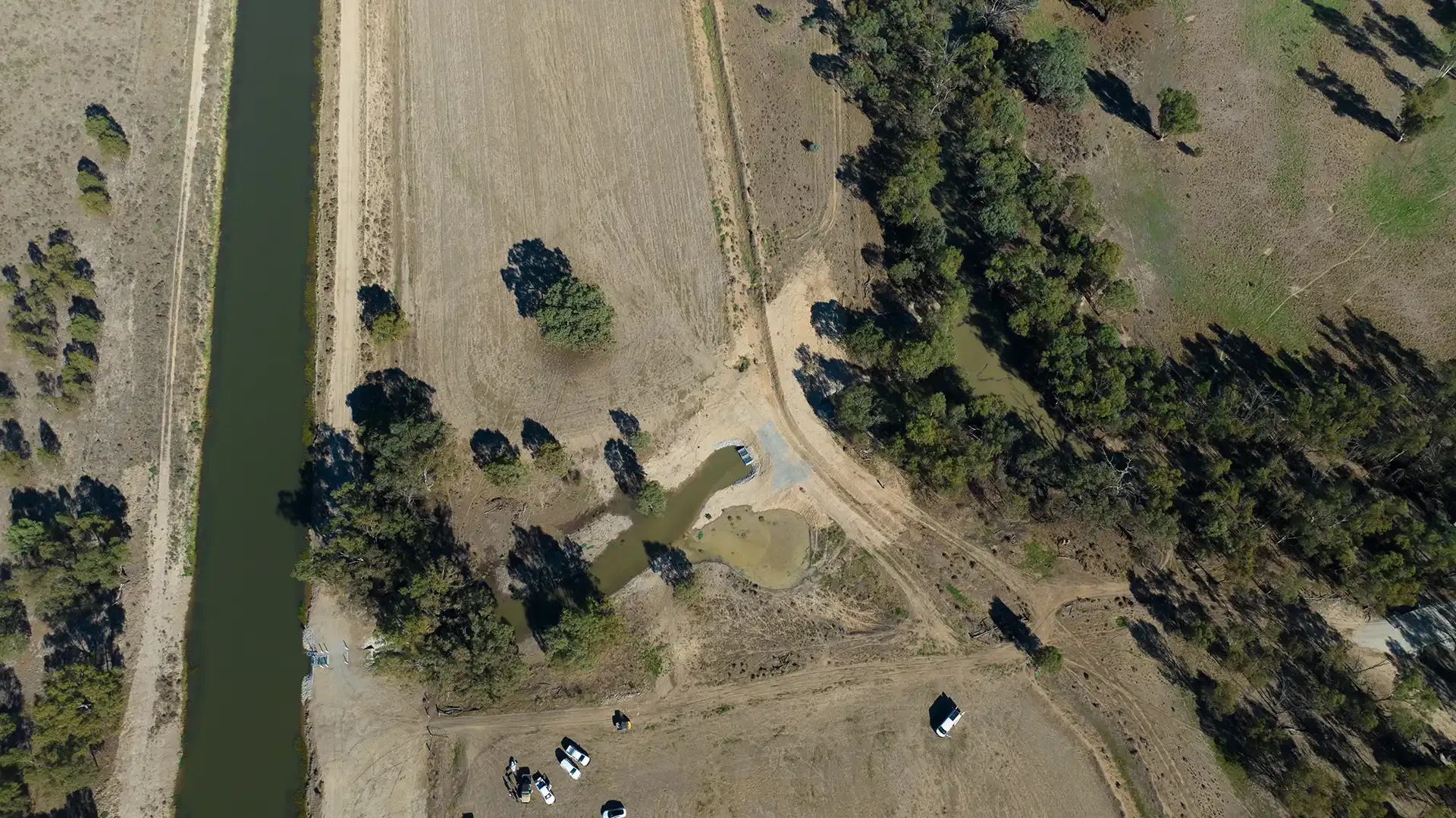
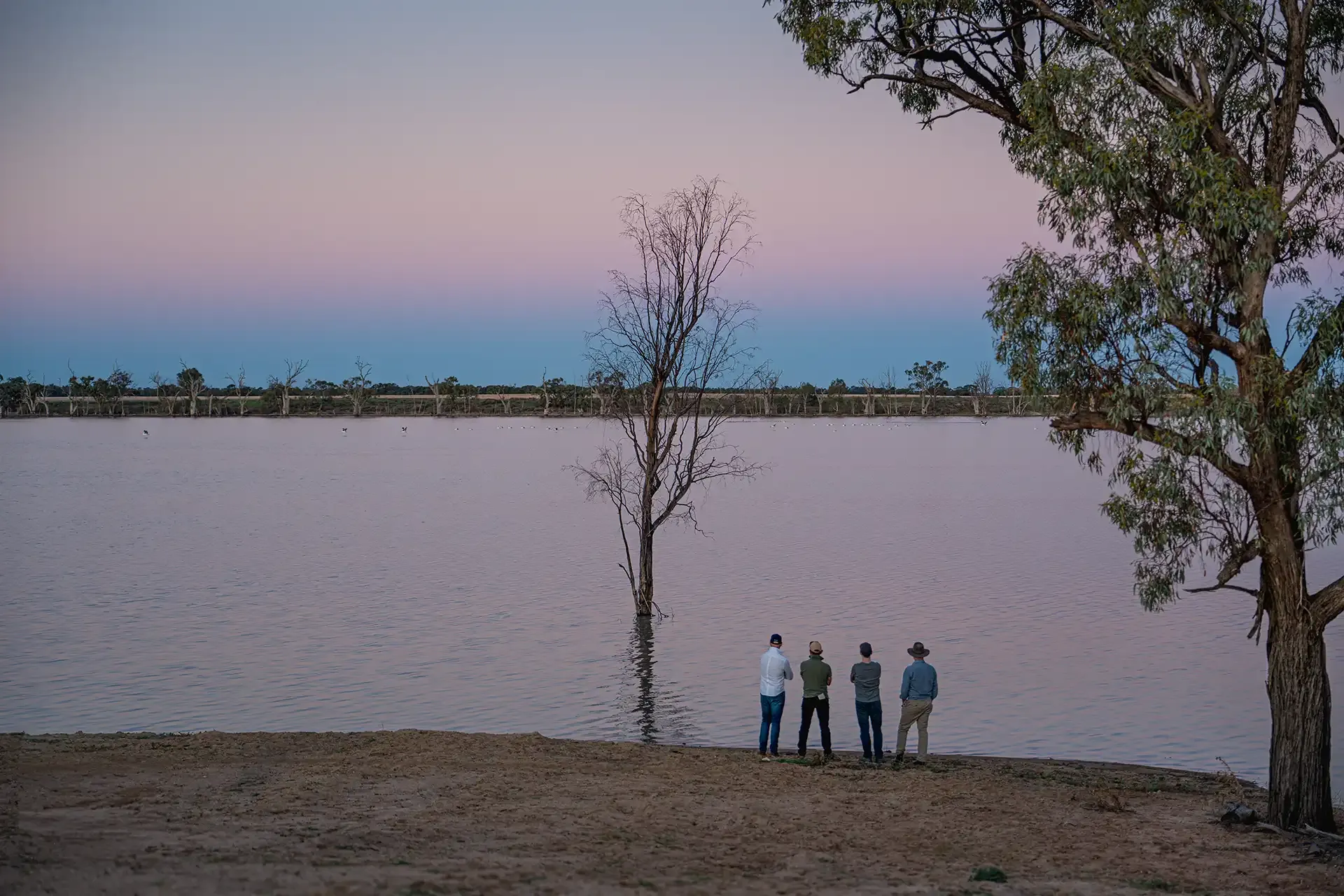
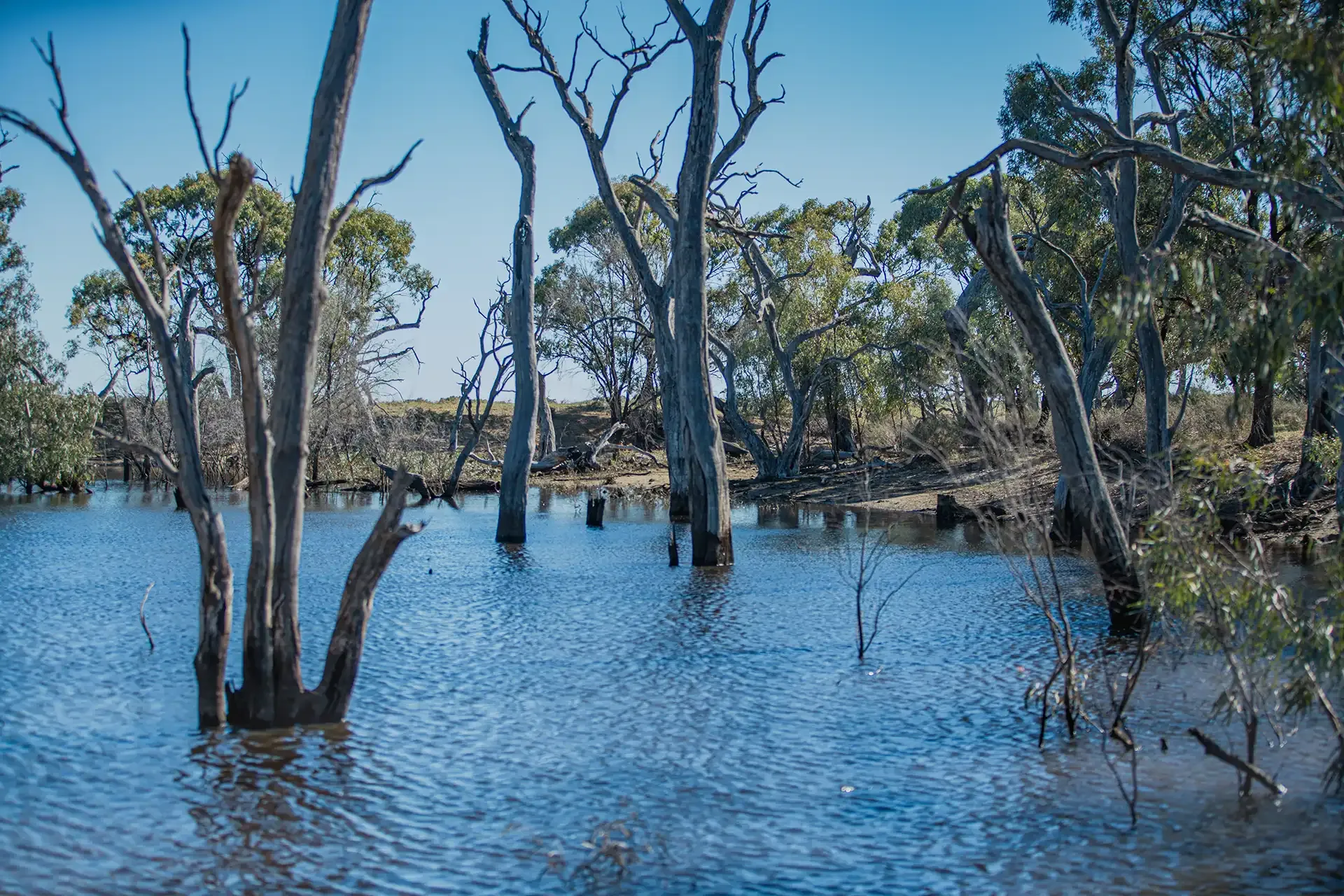
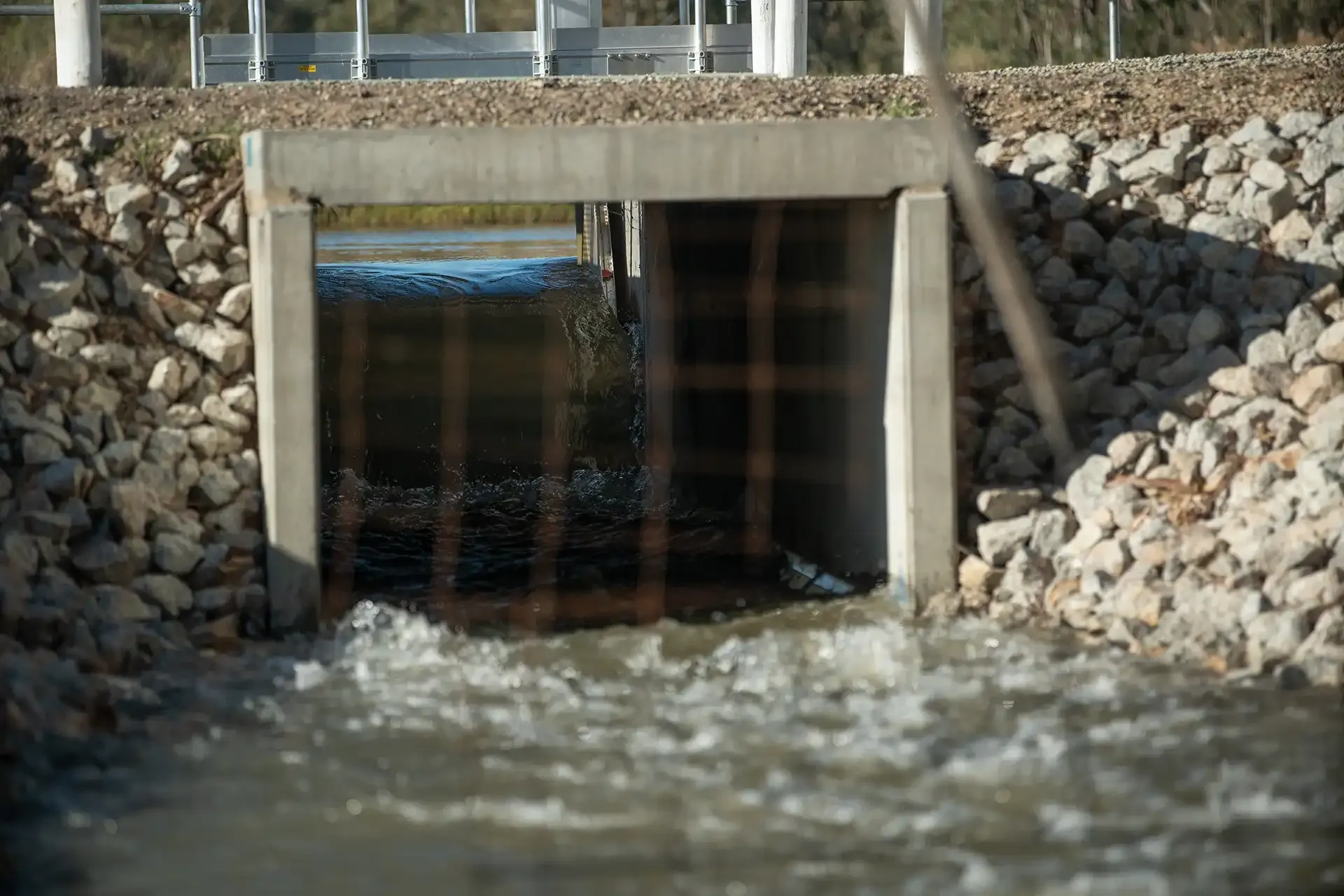
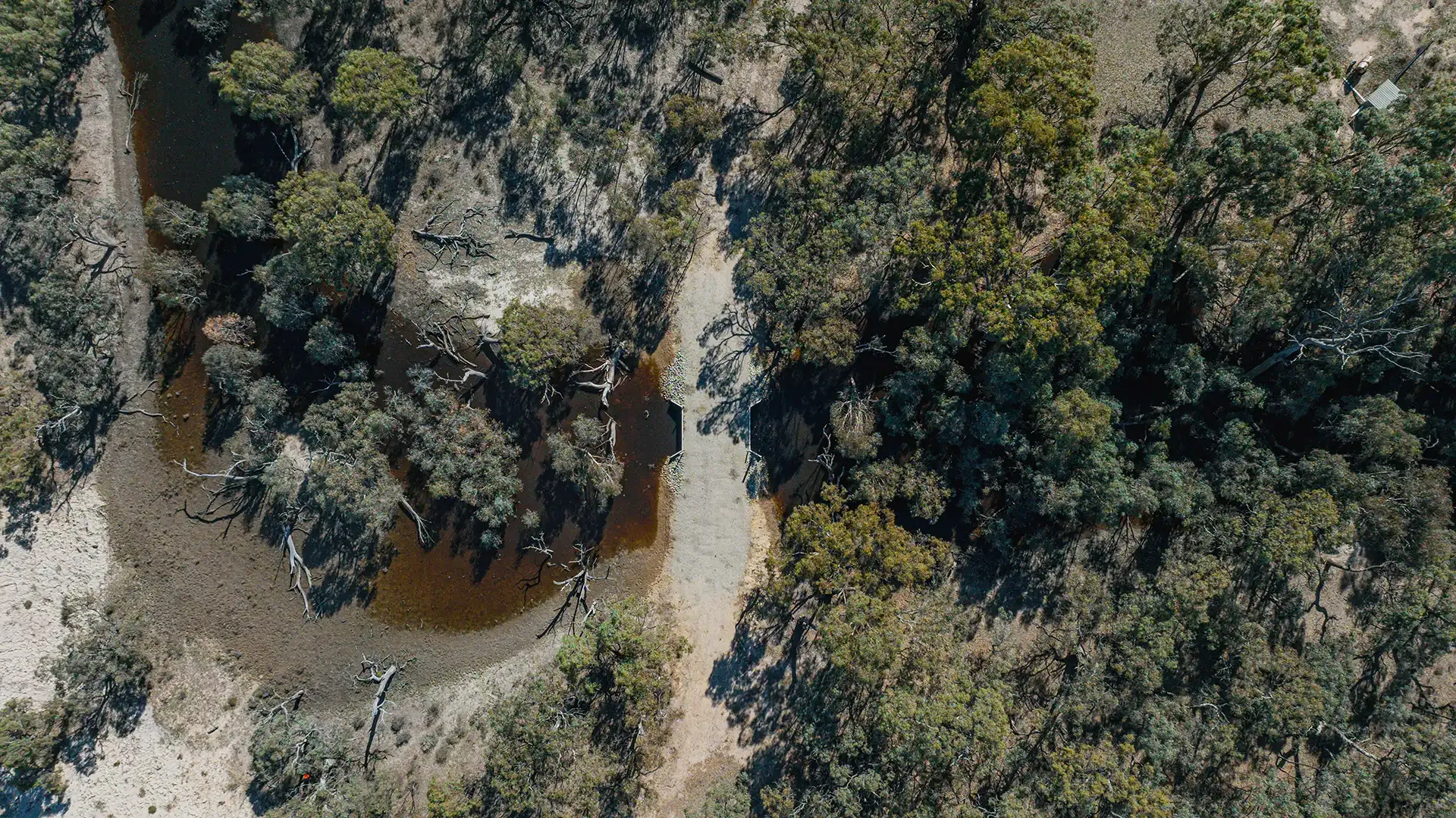
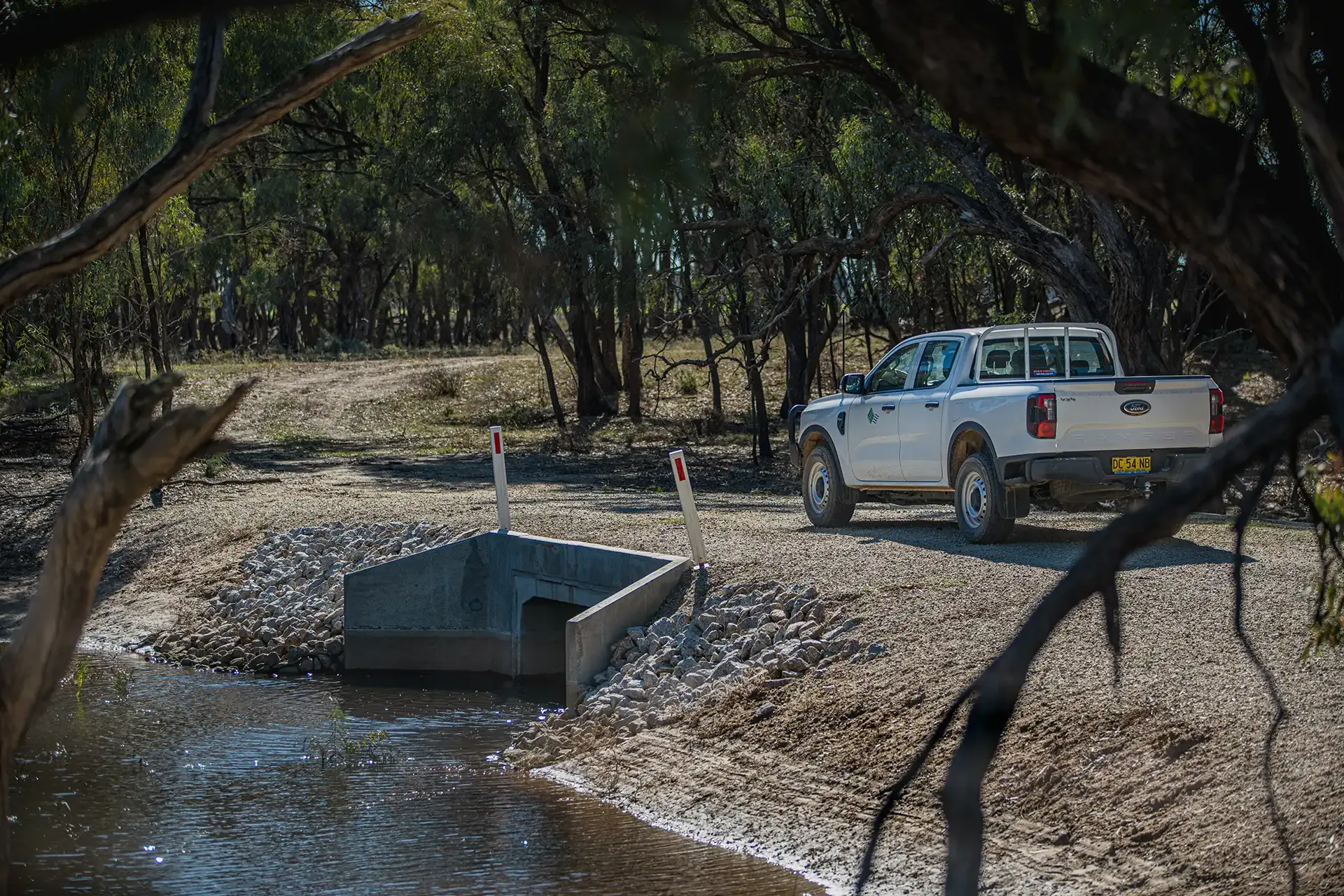
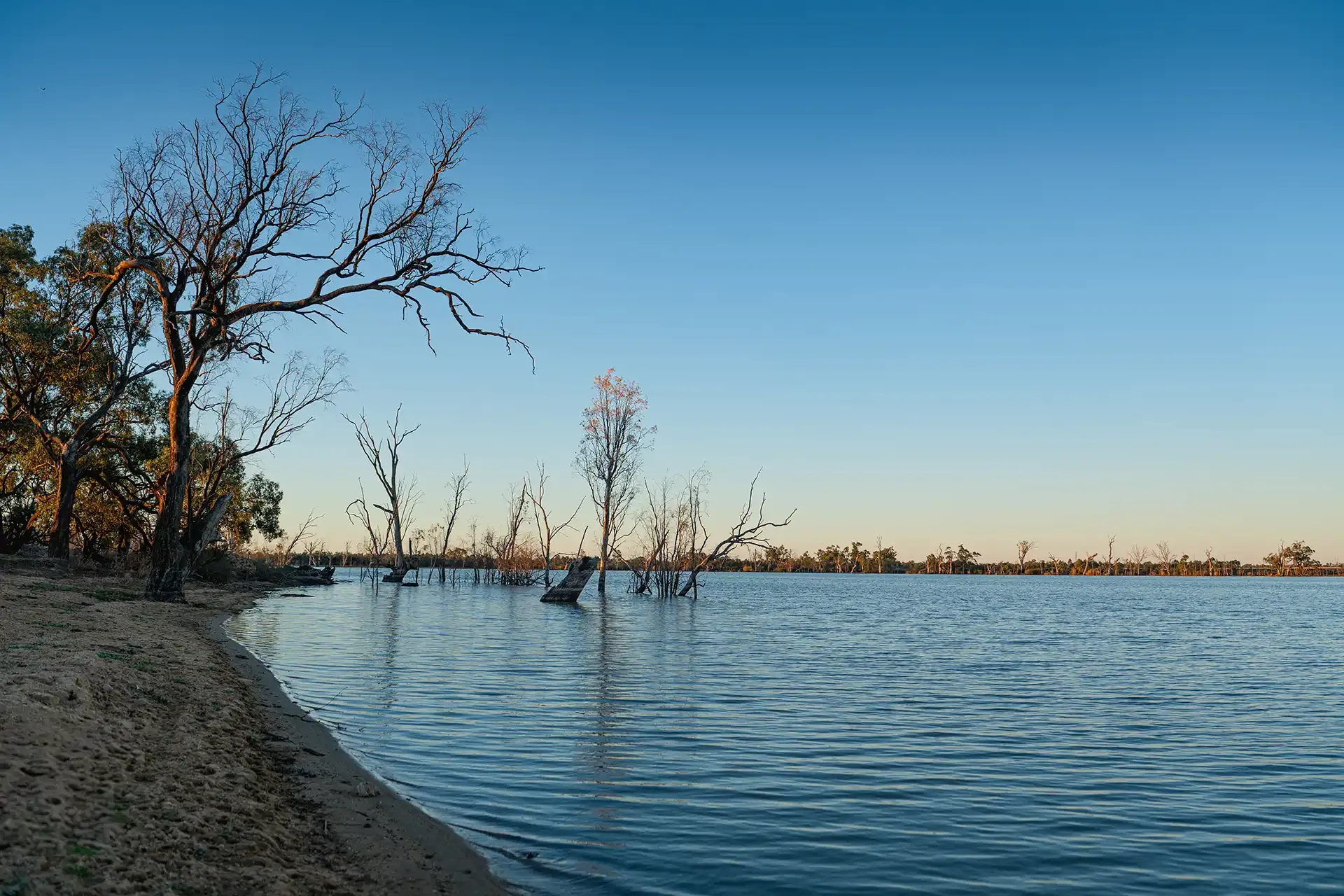
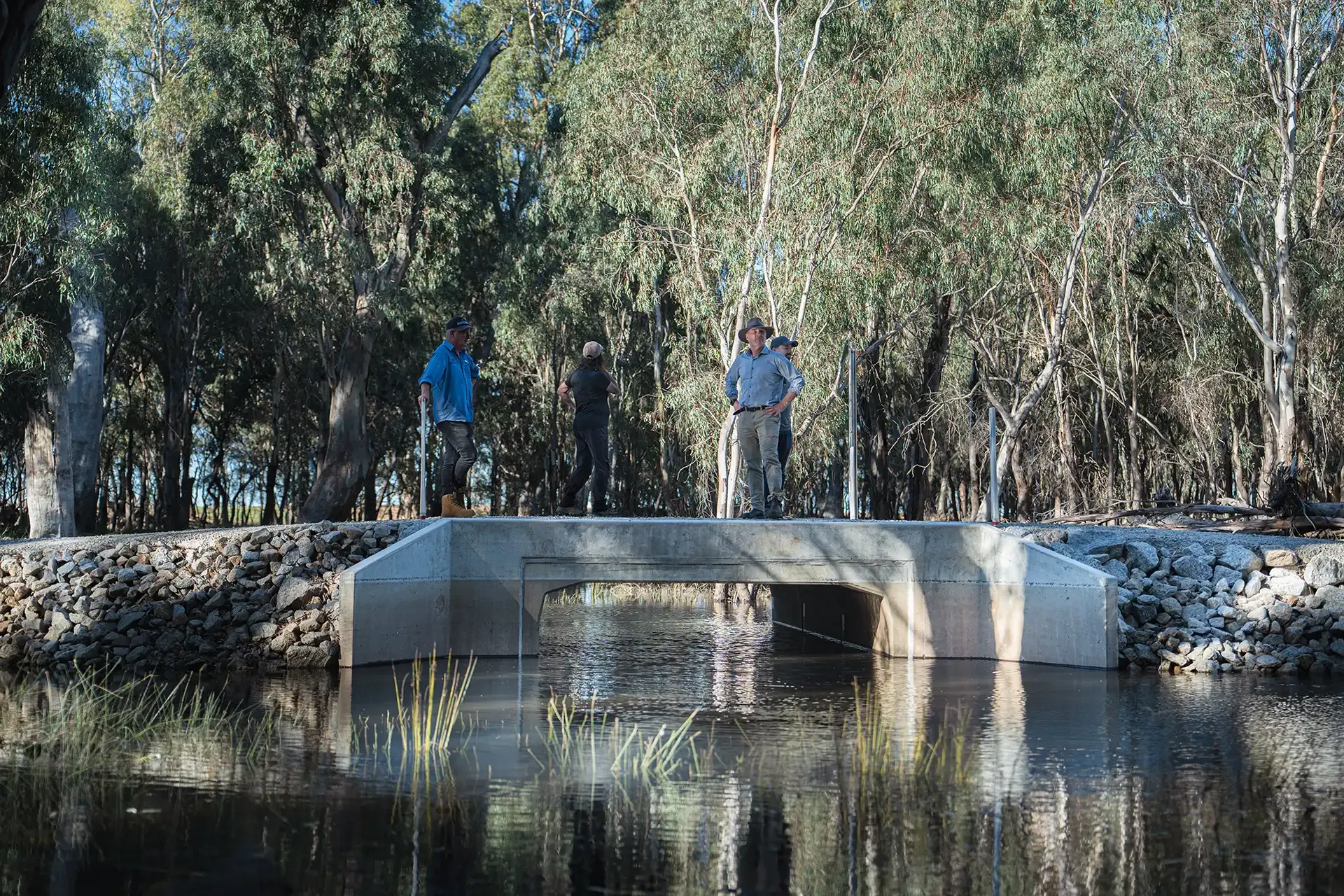
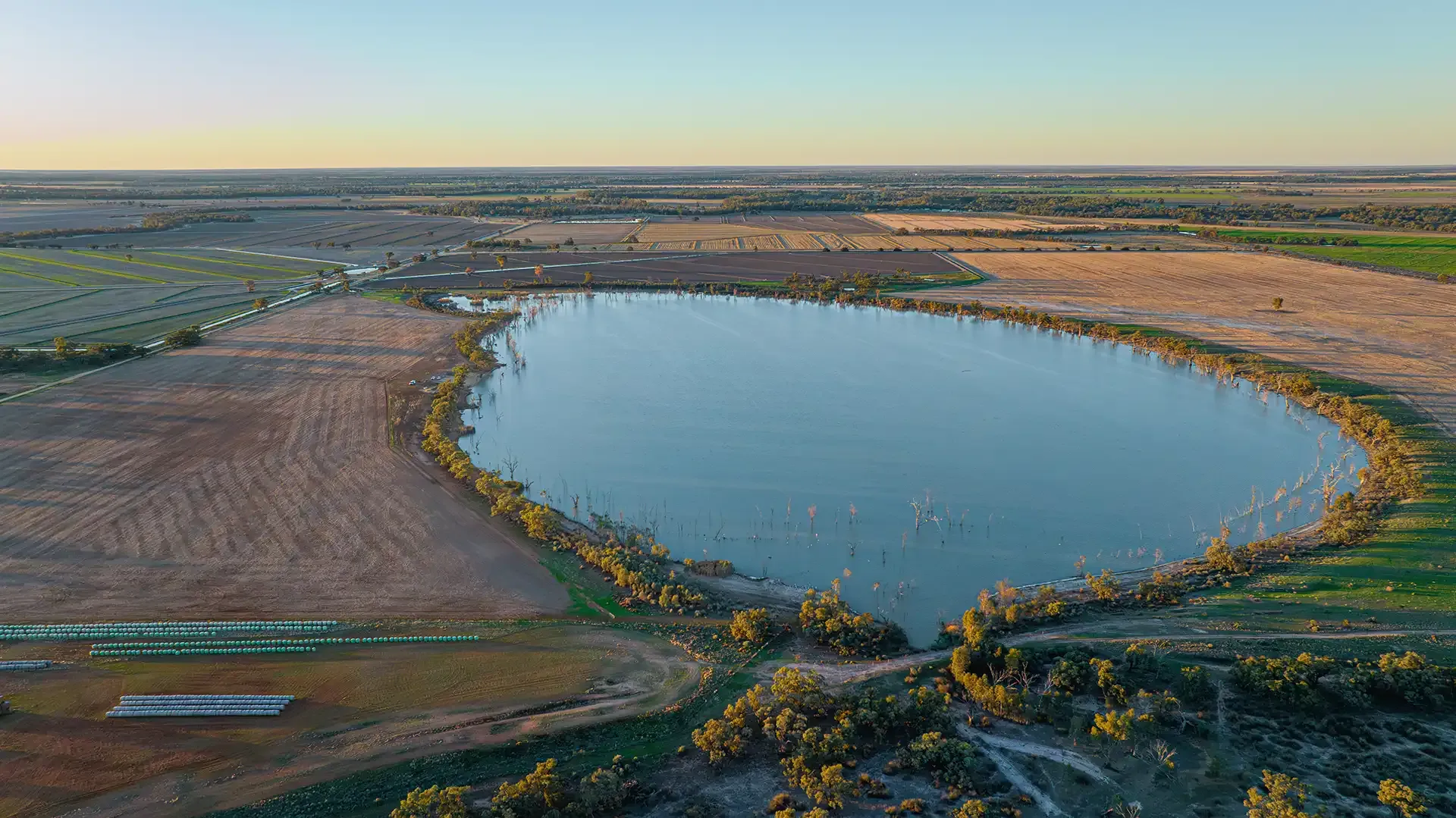
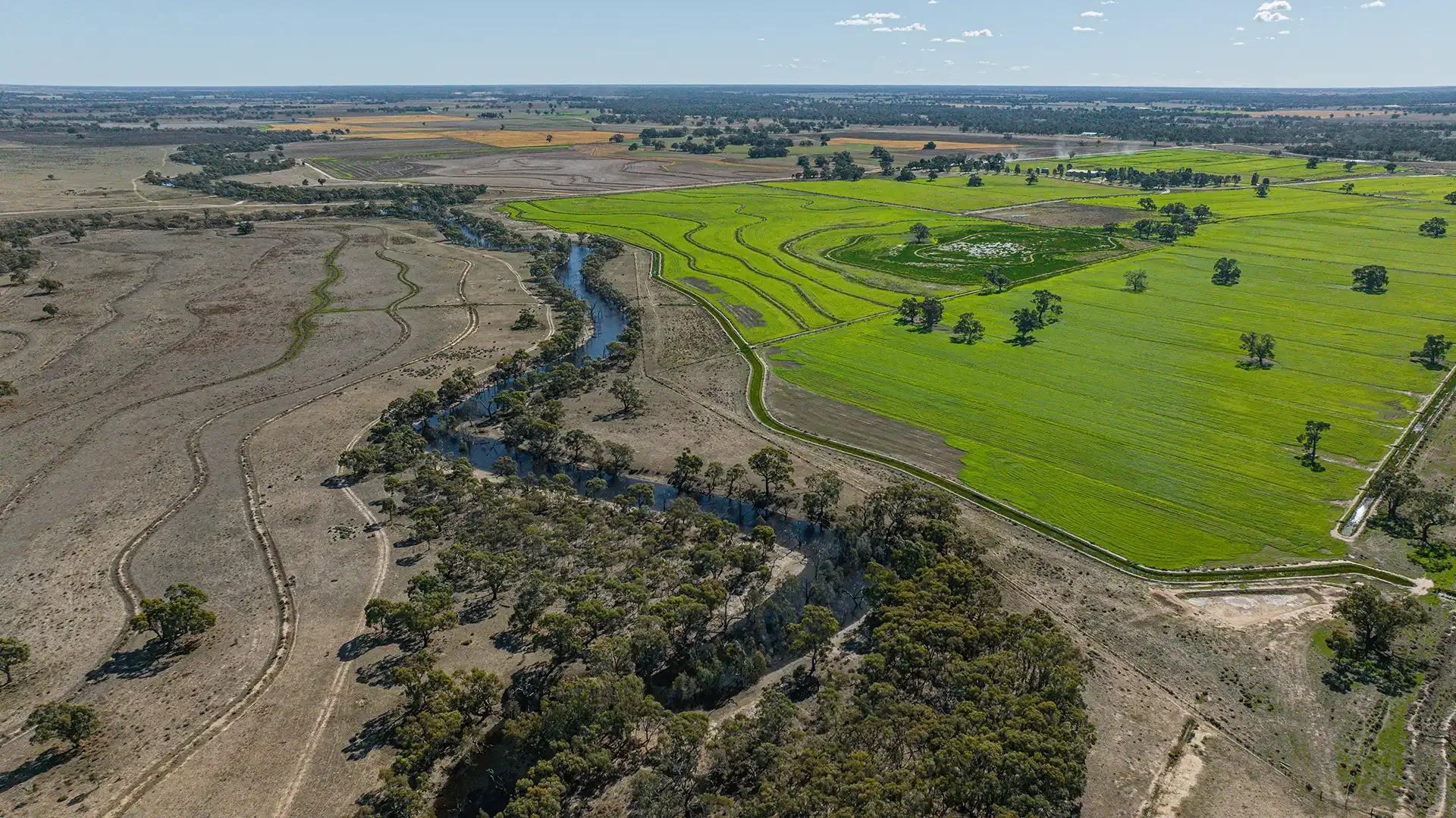
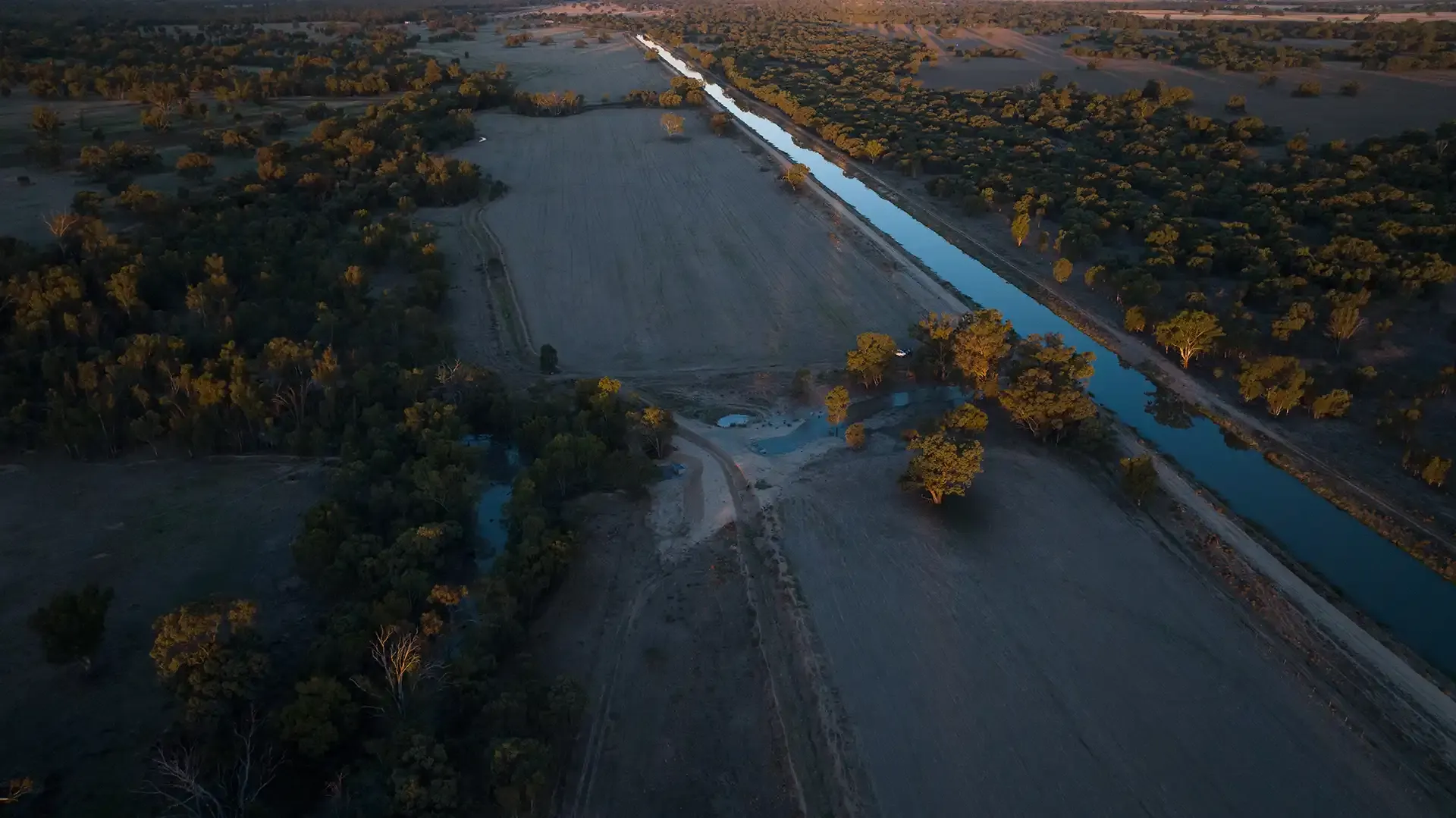
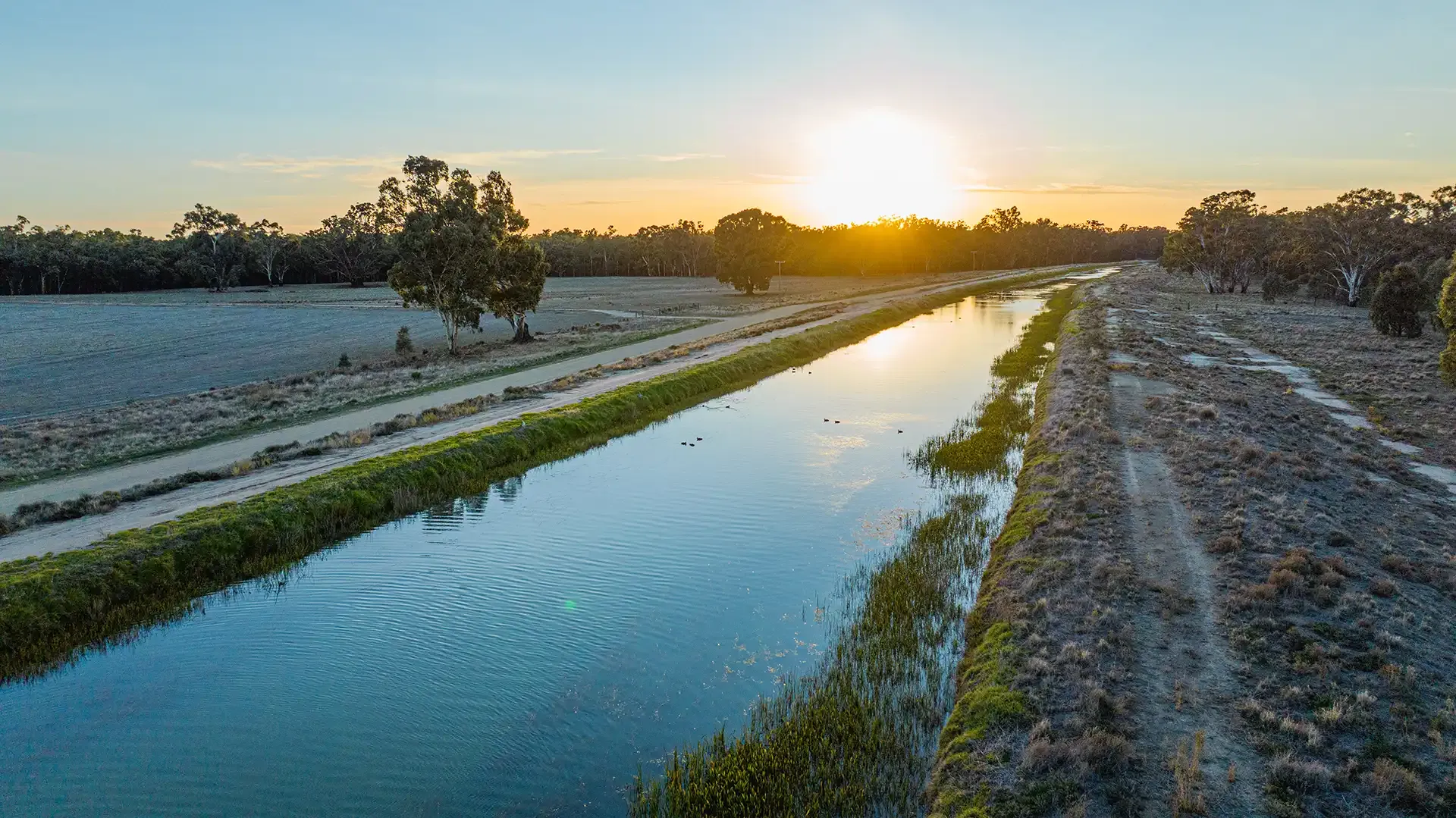
The types of benefits to flow from delivering environmental water into creeks and wetlands across the Murray Irrigation footprint include:
- Improvement of water quality in the creeks, particularly salt levels.
- Improvement of the condition of the fringing vegetation community including River Red Gums and Black Box.
- Providing connectivity between existing remnant pools and rivers.
- Providing feeding habitat for local waterbird populations and habitat in which native animal communities, such as native frogs, can successfully breed and grow.
- Opportunities for fish movement, dispersal of seeds and vegetation.
- Use of escapes to deliver small volumes of oxygenated water into the rivers, to improve the chances of native fish and crays surviving a possible low oxygen blackwater event.
Stakeholder engagement
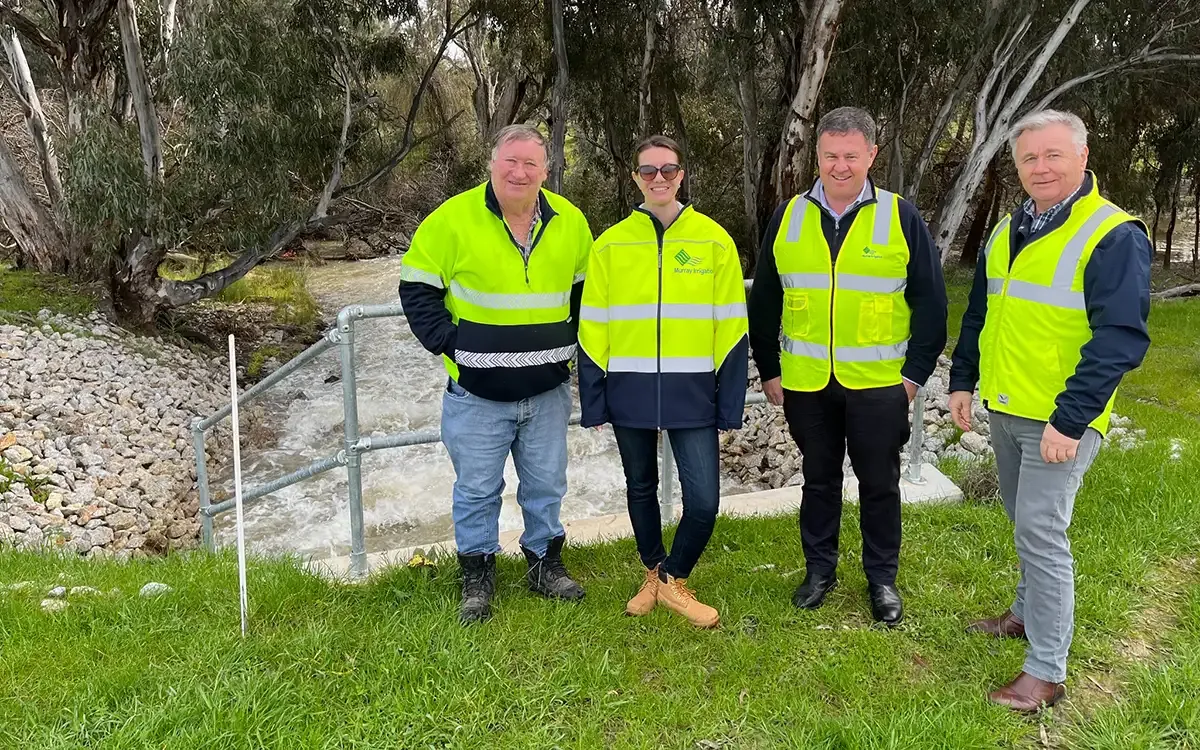
August 2022
Wakool farmer Dennis Gleeson, (then) Shadow Minister for Water Rose Jackson, Murray Irrigation CEO Ron McCalman, and (then) Shadow Minister for Agriculture and Regional NSW Michael Veitch during an inspection of the Mascotte Escape.
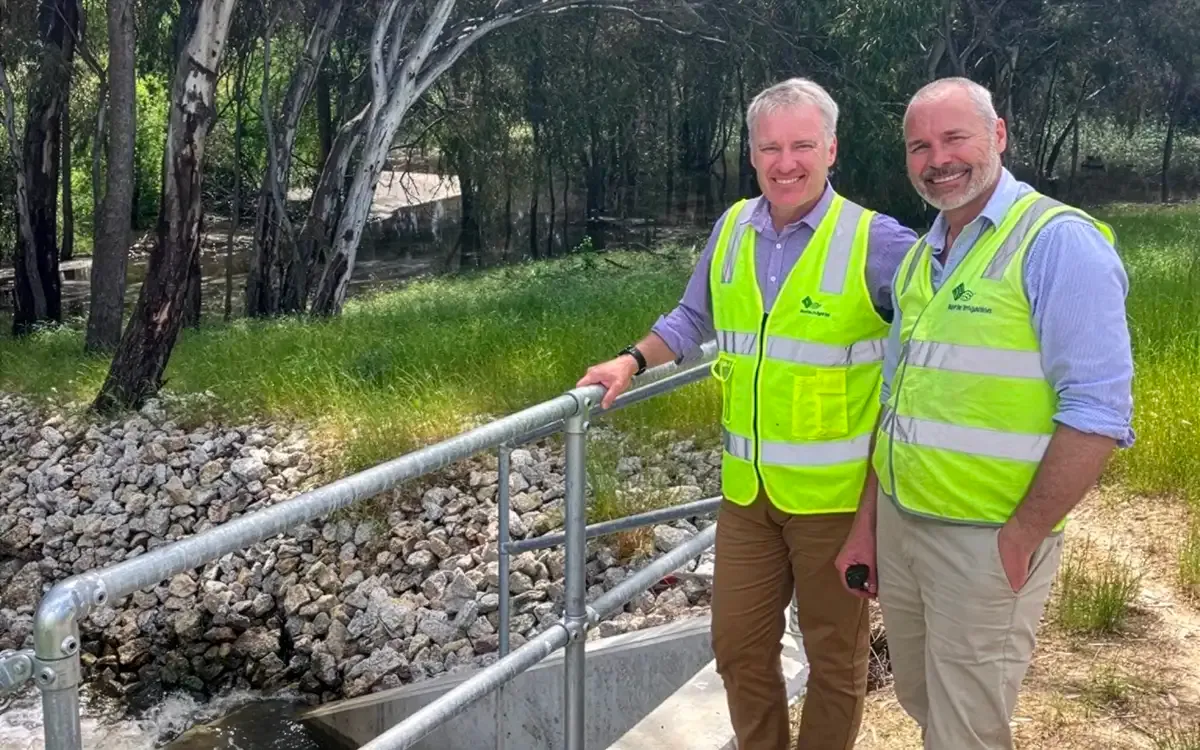
October 2022
Commonwealth Environmental Water Holder, Dr Simon Banks, was treated to a tour of our key irrigation sites in October. He is pictured with Murray Irrigation's (then) water policy specialist, Michael Pisasale
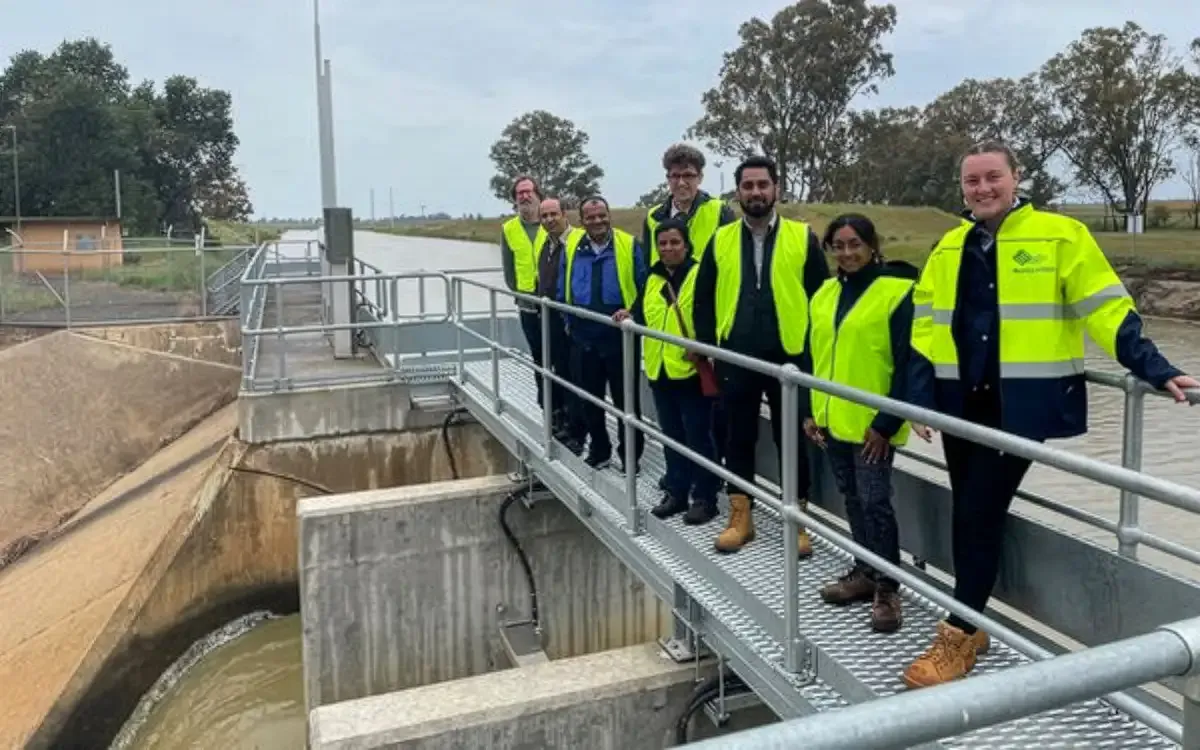
October 2022
Murray Irrigation hosted modellers from the Murray-Darling Basin Authority for a tour of on a tour of our Lawsons Syphon and Edward River Escape, where we were able to show the group how our escapes can be used to send environmental water out to rivers, creeks, and wetlands, and how those escapes can act as water oxygenators for fish during blackwater events.
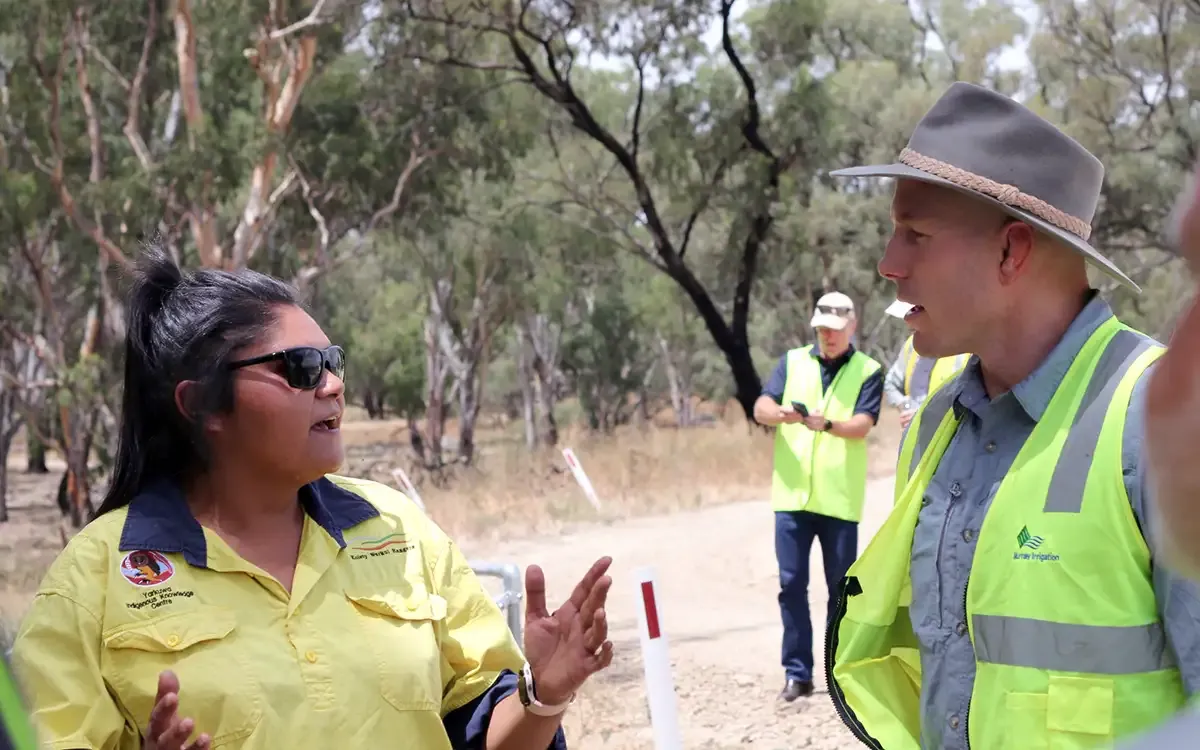
January 2023
Yarkuwa Indigenous Knowledge Centre's Liticia Ross and Senator David Pocock on tour at a Murray Irrigation's Mascotte Escape.
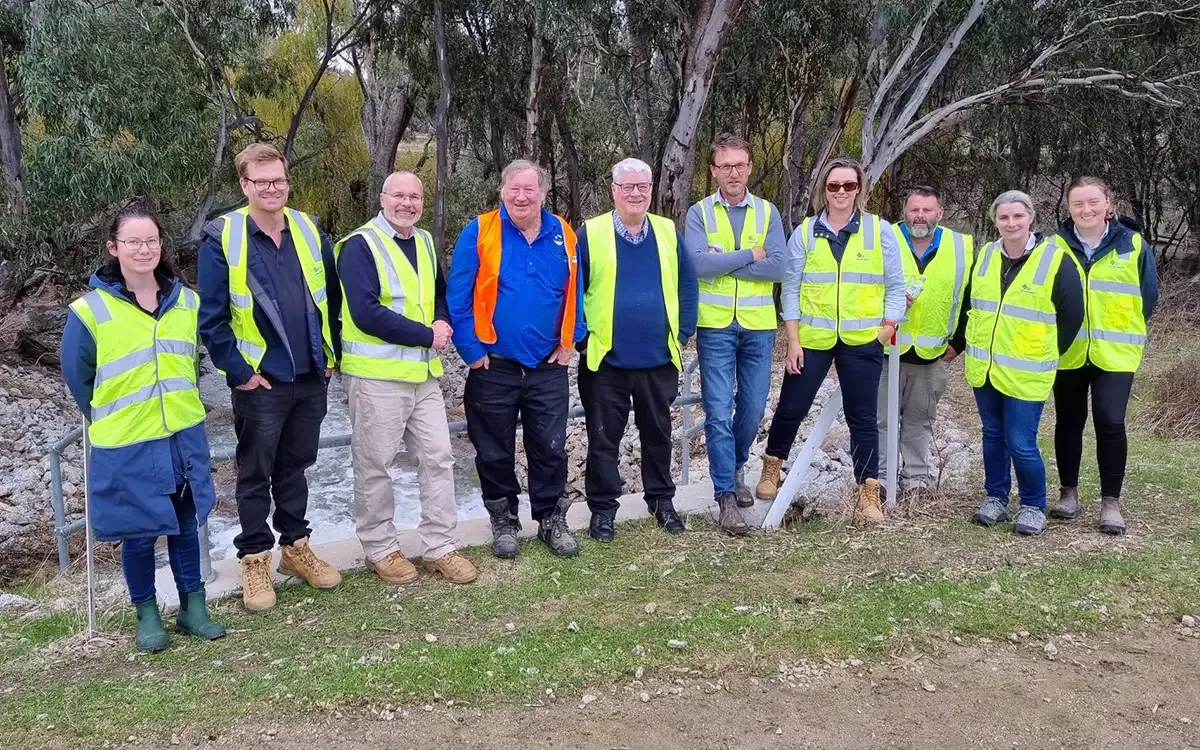
June 2023
Representatives from Deakin University's CeRRF, the NSW Government and the Department of Planning and Environment, Biodiversity and Conservation Division and Murray Irrigation during a regional education and information sharing tour in June.
As part of the itinerary, the participants visited Murray Irrigation's Mascotte Escape to learn how we are working with the Department of Planning and Environment to deliver environmental water into the Jimaringle and Cockran creeks using our irrigation infrastructure.
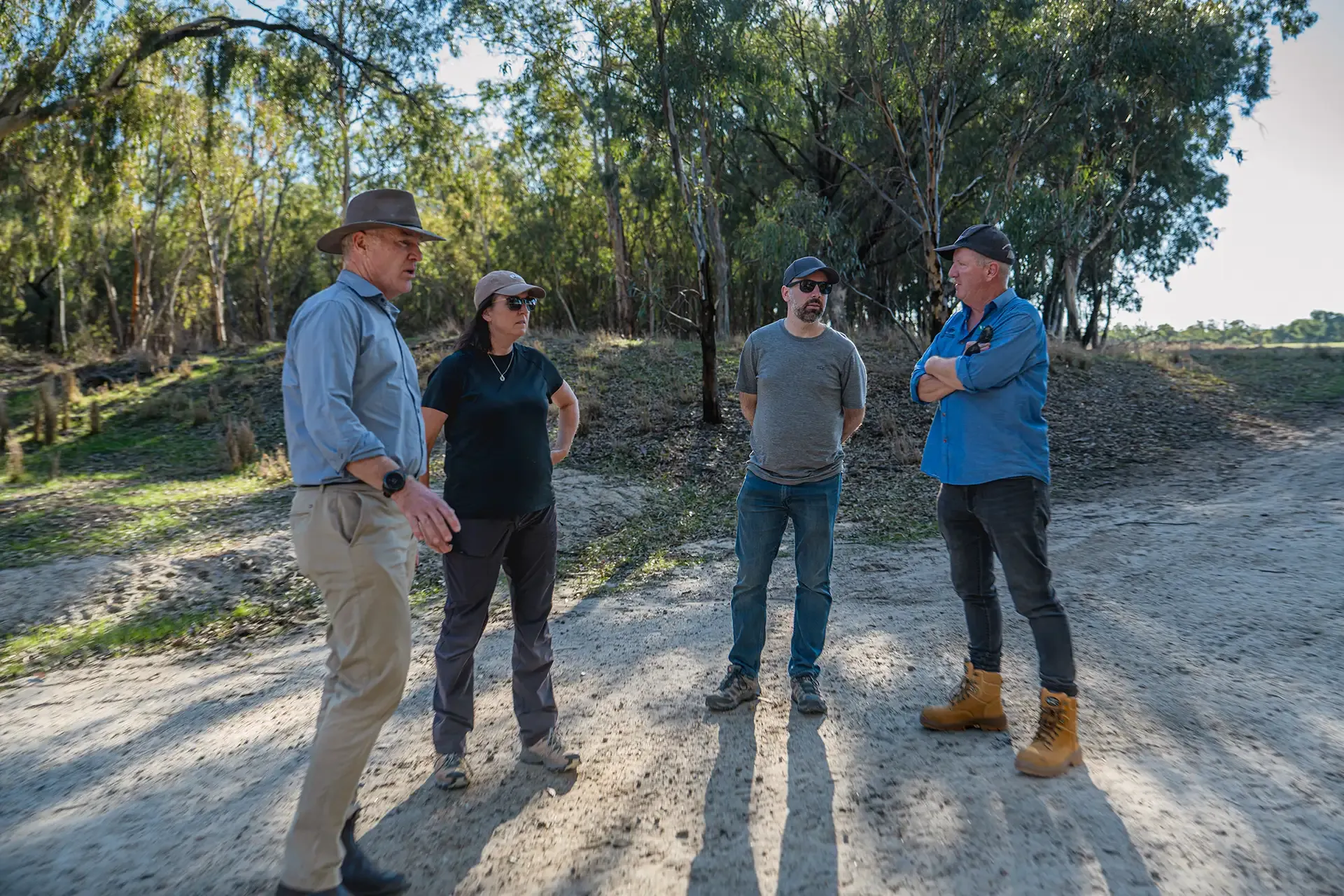
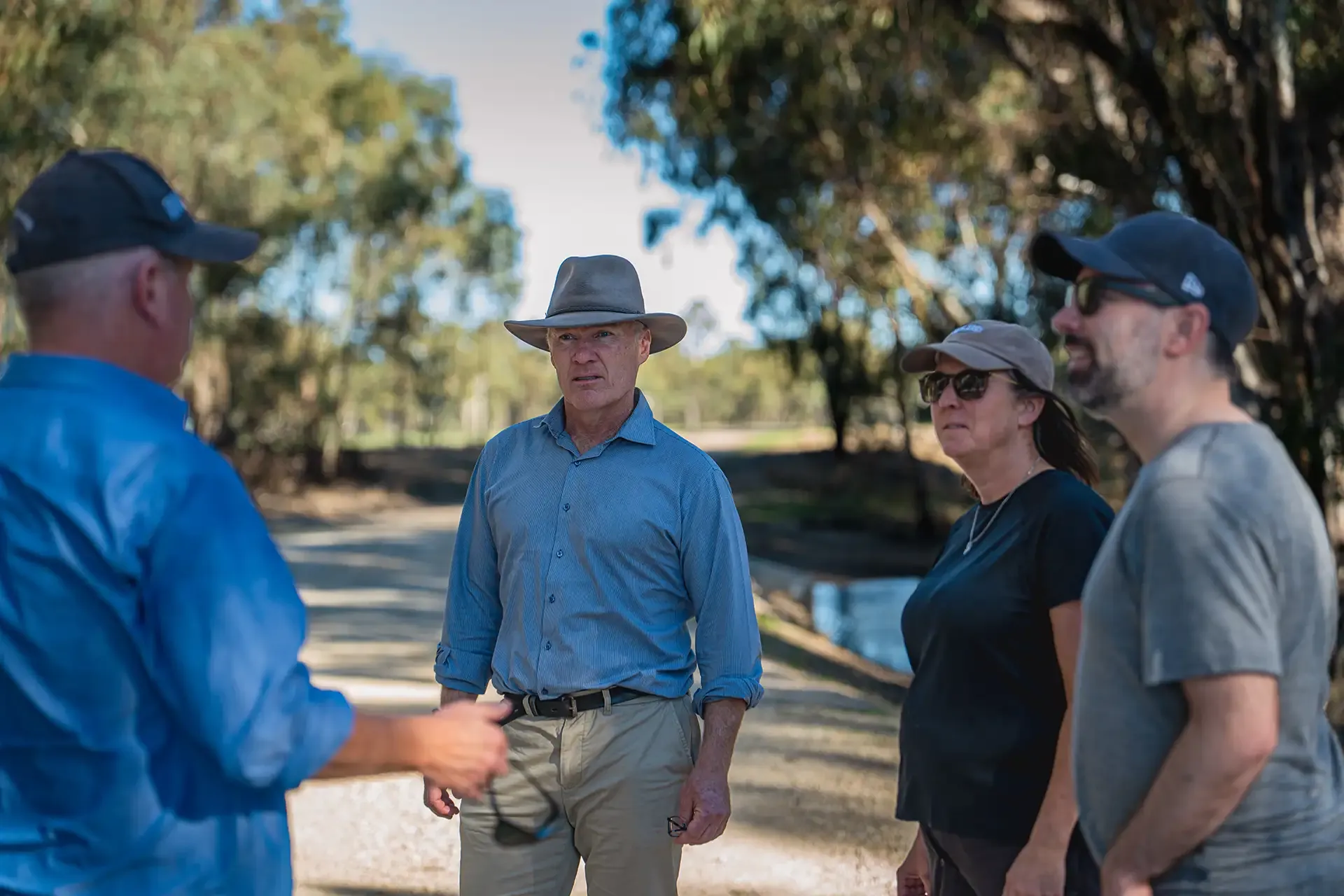
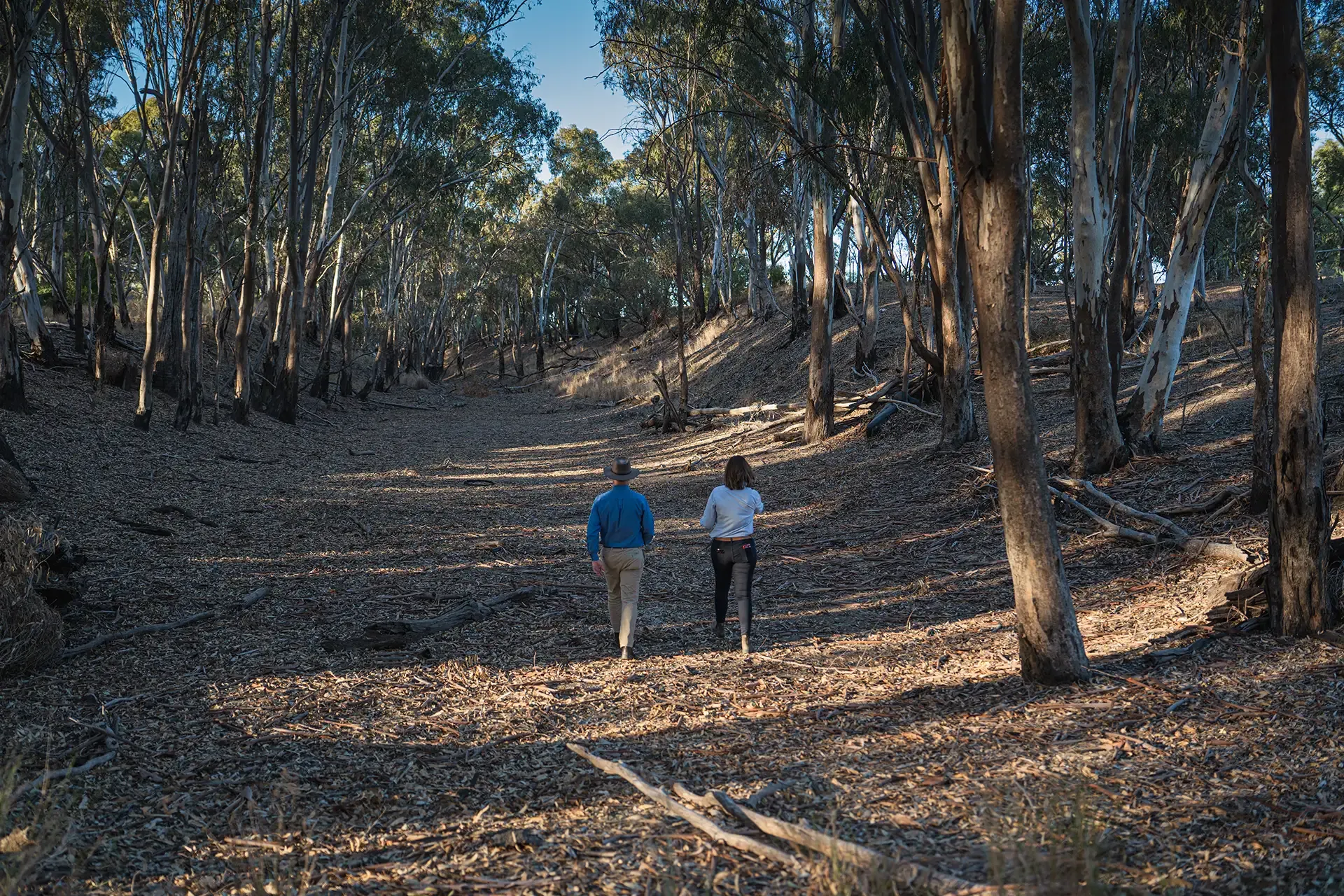
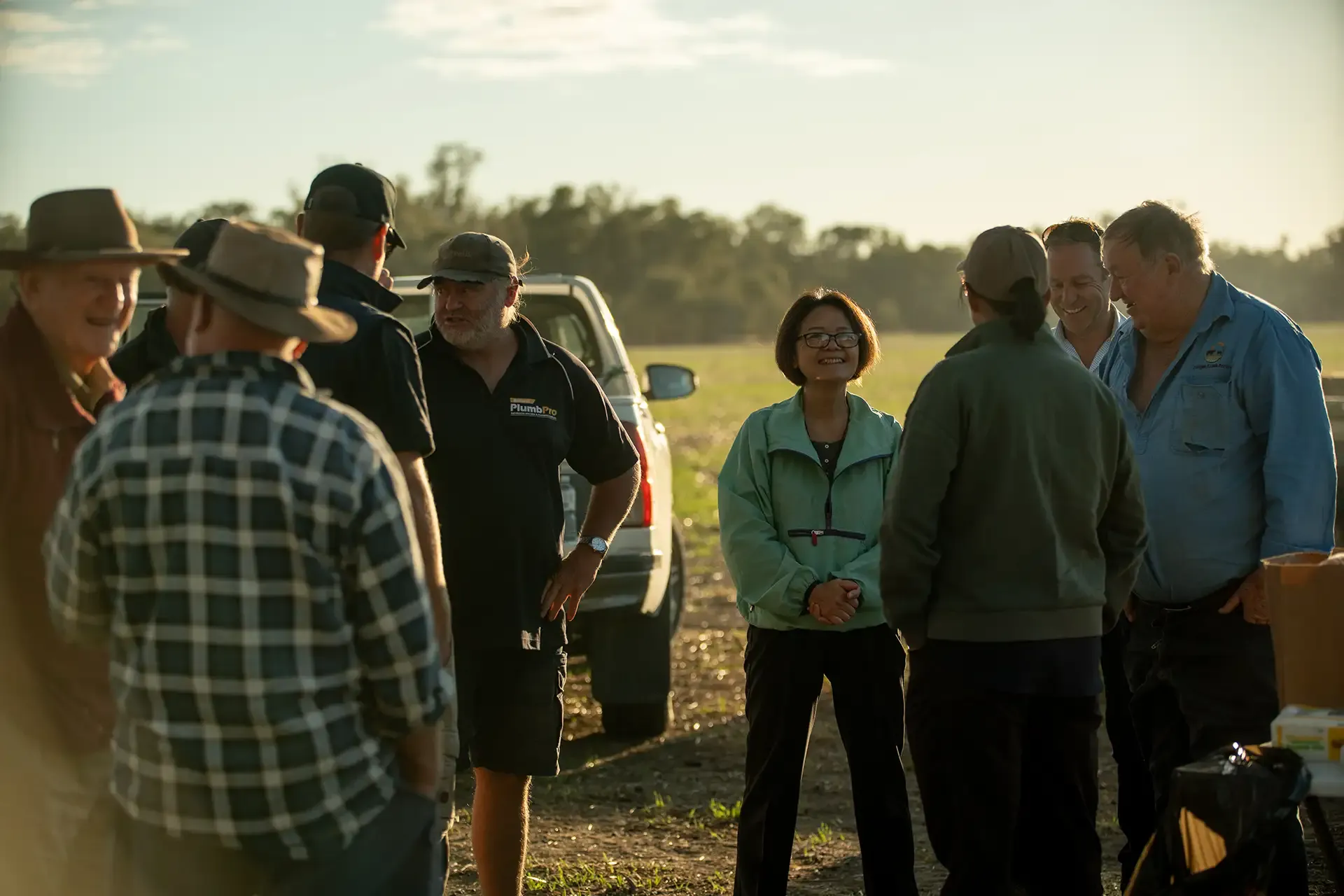
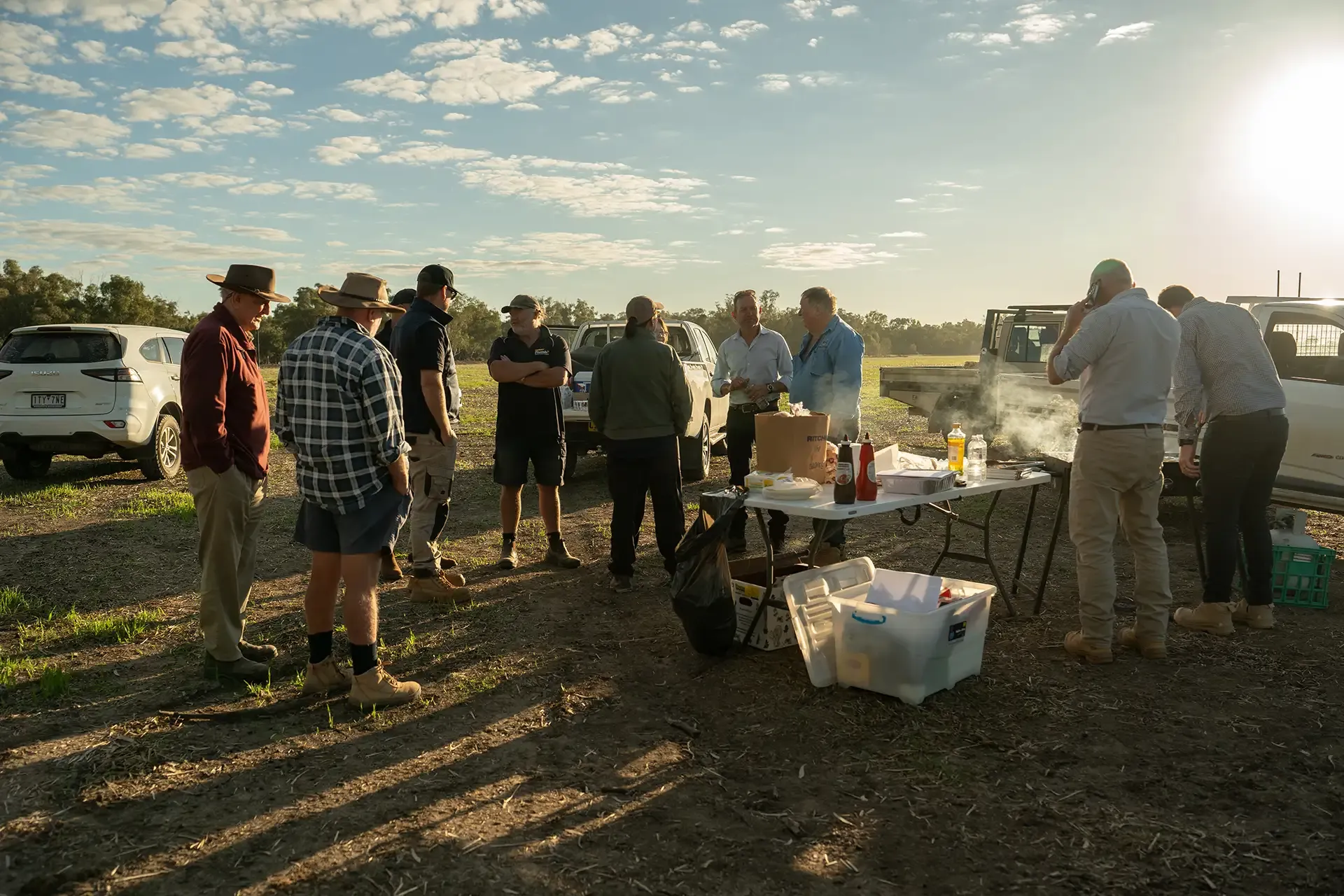
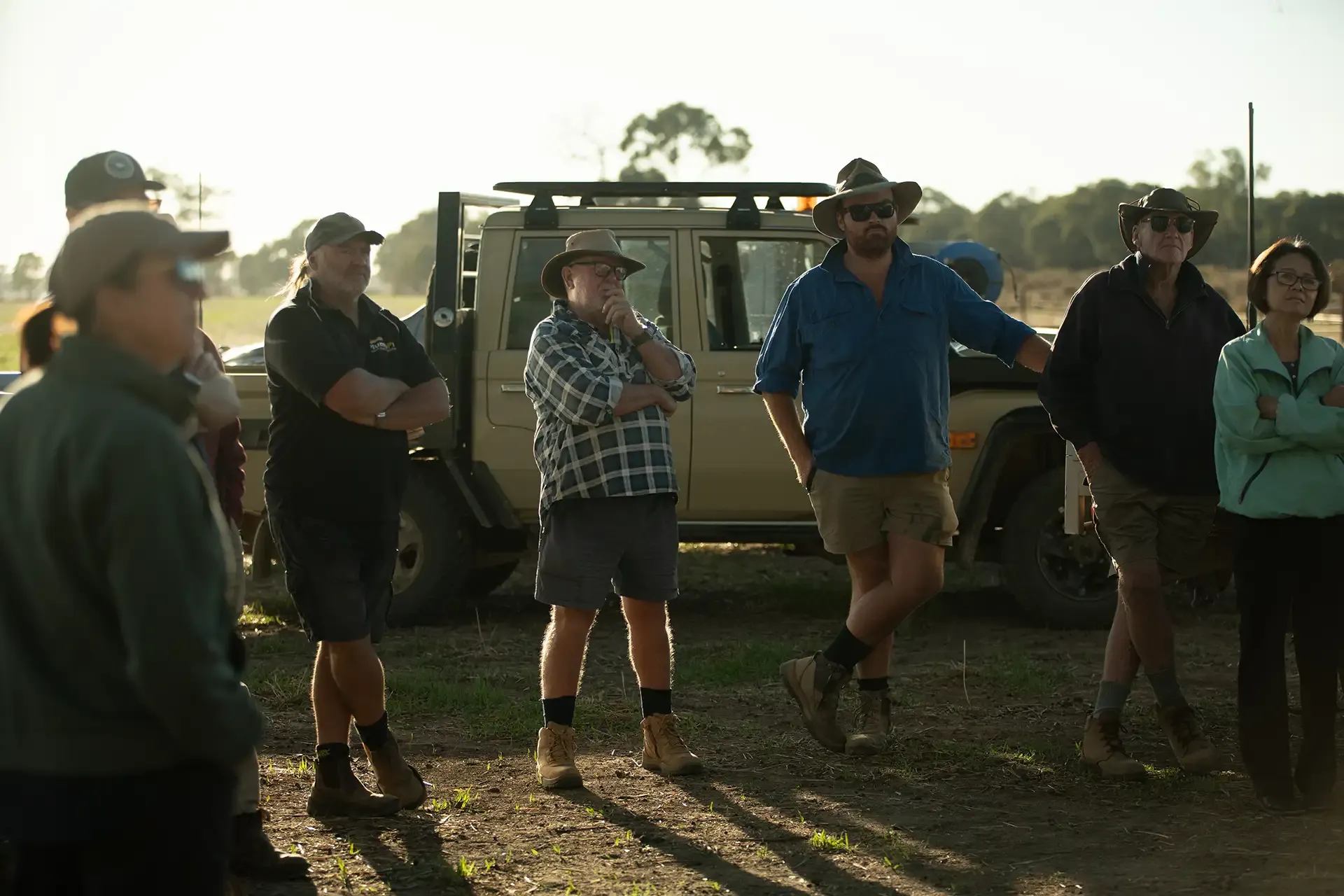
Since the commencement of the RMW project, Murray Irrigation has worked closely with a broad range of stakeholders, including state and federal governments and their associated agencies, First Nations groups, local landcare organisations, universities, environmental water managers, landholders and neighbouring communities.
This comprehensive engagement approach has been fundamental to the project’s success.
Strong partnerships with landholders have been particularly critical. Murray Irrigation’s long-standing, trusted relationships — built through decades of delivering irrigation water — has provided a solid foundation for the project’s environmentally focused works. This established trust has enabled widespread support and collaboration.
Landholders have consistently described the process as seamless and mutually beneficial, noting that the clear communication and coordinated delivery has allowed new infrastructure to be integrated smoothly and without disruption to their operations. Across all stages of the RMW project, participation from landholders has remained at 100 per cent.
