
Collaborative project relocates native fish
20 July 2026
More than 250 fish and 18 turtles have recently been relocated to their natural habitat, thanks to a collaborative effort that provides ecological benefit in the NSW Murray region.
They have been recovered from irrigation channels and relocated to nearby rivers, as part of a project that involves local organisations working towards a common goal
It’s called the Fish Salvage Project and is managed by the Western Murray Land Improvement Group (WMLIG), with support from Traditional Owners, Murray Irrigation Ltd (MIL) and the NSW Recreational Fishing Trust.
It had its origins in 2022, when a member of the Watti Watti Wamba Wamba Nation saw an opportunity to relocate native fish, which they spotted when the region’s irrigation channels were being de-watered for annual maintenance.
A pilot Fish Salvage Project was undertaken in 2023, and in 2025 a two-year fully funded project was launched, with Traditional Owners leading on-ground works, supported by WMLIG as project managers, as well as MIL.
They worked together to ensure native species were safely relocated from channels to their natural environment in local rivers.
Last year, 109 native fish were relocated including 63 Murray cod (five of which measured close to a metre in length), along with 33 golden perch and 13 silver perch. Thirteen turtles were also rescued and relocated.
This year the results have been even more impressive, with the rescue of more than 250 fish and 18 turtles, including 53 Murray cod, 13 golden perch, a silver perch, 11 bony bream, 54 Murray-Darling rainbow fish, 32 Murray hardyhead, seven flatheaded gudgeon and 73 Australian smelt. There were also 17 eastern long-necked turtles and a Murray River turtle.
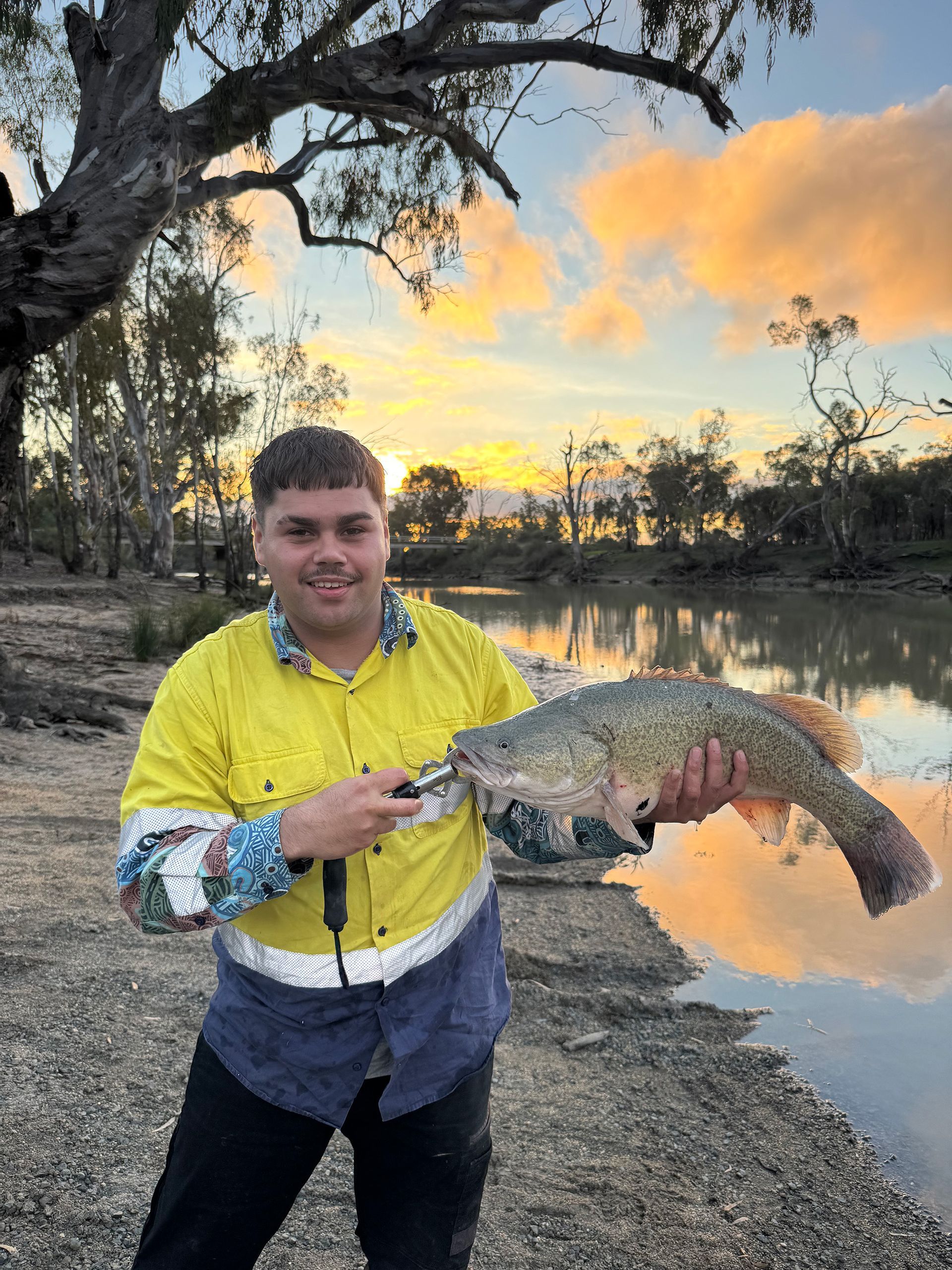
Tyron Ross–Gardam holding a Murray Cod to be released into its native habitat.
In 2025, WMLIG appointed a Project Officer to manage the works and contracted two Barapa Barapa Traditional Owners as the Ground Crew, while MIL purchased an aerator system to provide oxygenation to siphons, following difficulties retrieving fish from these during the trial.
This year the team was expanded, with a further two Barapa Barapa Traditional Owners, who were upskilled by the previous year’s Ground Crew and worked in this capacity for the 2026 Fish Salvage Project.
Importantly, for the Fish Salvage team, there is immense satisfaction behind the work they are doing.
After a day relocating native fish this year, one of the team members stated, “it was the most satisfying work day I have ever had in my life”.
WMLIG Executive Officer Roger Knight said the project showed how good outcomes can be delivered for the community and the environment through strong collaboration, as it “improves the long-term survival of threatened and endangered species in our region’s waterways”.
It is also setting an example which other irrigation areas may be able to follow.
“We are buoyed by the increased number of native fish that were recovered this year as the project expands," Mr Knight said.
“We more than doubled the number of native fish relocated compared with the previous year and also relocated more turtles.
“The results highlight the benefits and success of the project, which we hope to continue in future years.”
ENDS.
Media Contact:
Roger Knight – WMLIG Executive Officer
M: 0487 455 511
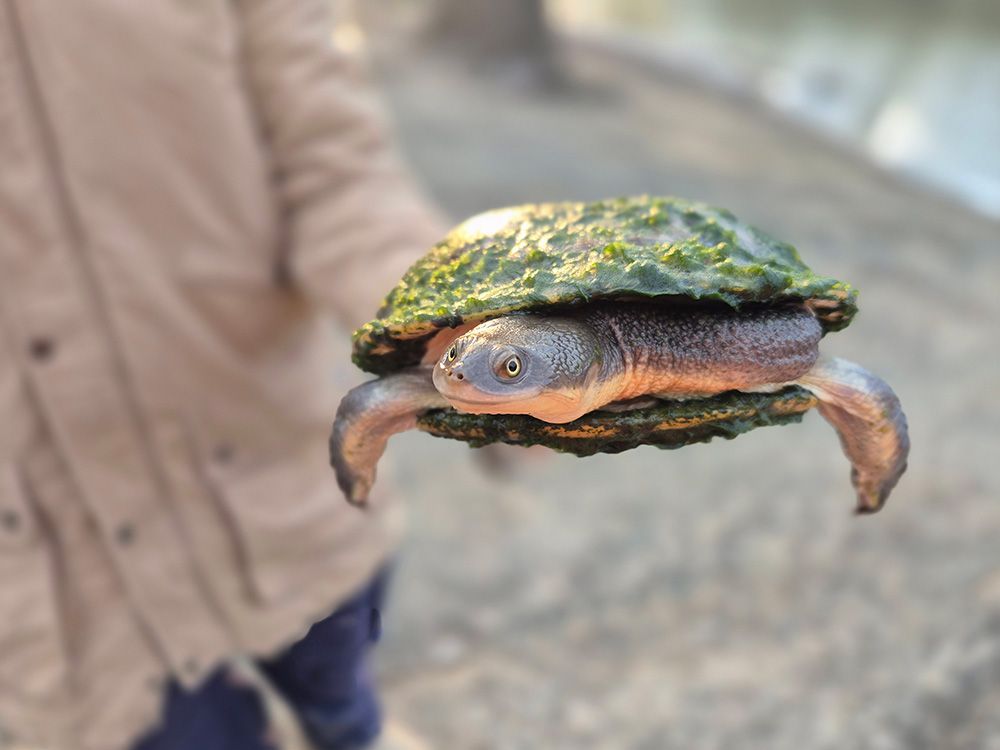
A small turtle happy to be relocated into the local river system.
